




-
 Residential Roofing
-
 0 Comments
Why TPO Roof Seams Fail and How Commercial Repairs Are Made
Any commercial property owner in East Texas with a TPO membrane roof knows that seams are the frontline for leaks and roof failures. TPO (thermoplastic polyolefin) roof seam failure is one of the most common triggers for commercial flat roof leaks, and the reasons usually come down to poor welding, material contamination, building movement, or aging. When these seams fail, water intrusion can rapidly damage insulation, decking, and building interiors—resulting in significant repair costs.
At Roof Care, our team routinely helps commercial building owners, property managers, and facility directors understand why TPO seams fail and how proper repairs or overlays can extend the life of their roof. Our focus on commercial projects across Longview, Tyler, Marshall, Kilgore, and other East Texas cities means we address these challenges every day, with specialized in-house crews and proven repair strategies.
Definition: What Are TPO Roof Seams?
TPO, or thermoplastic polyolefin, is a single-ply roofing membrane widely used on commercial flat and low-slope roofs. The integrity of a TPO roof relies on the heat-welded seams where separate membrane sheets overlap and are fused into a continuous waterproof barrier. If these welds are incomplete, contaminated, or overstressed, water can infiltrate and lead to roof leaks.
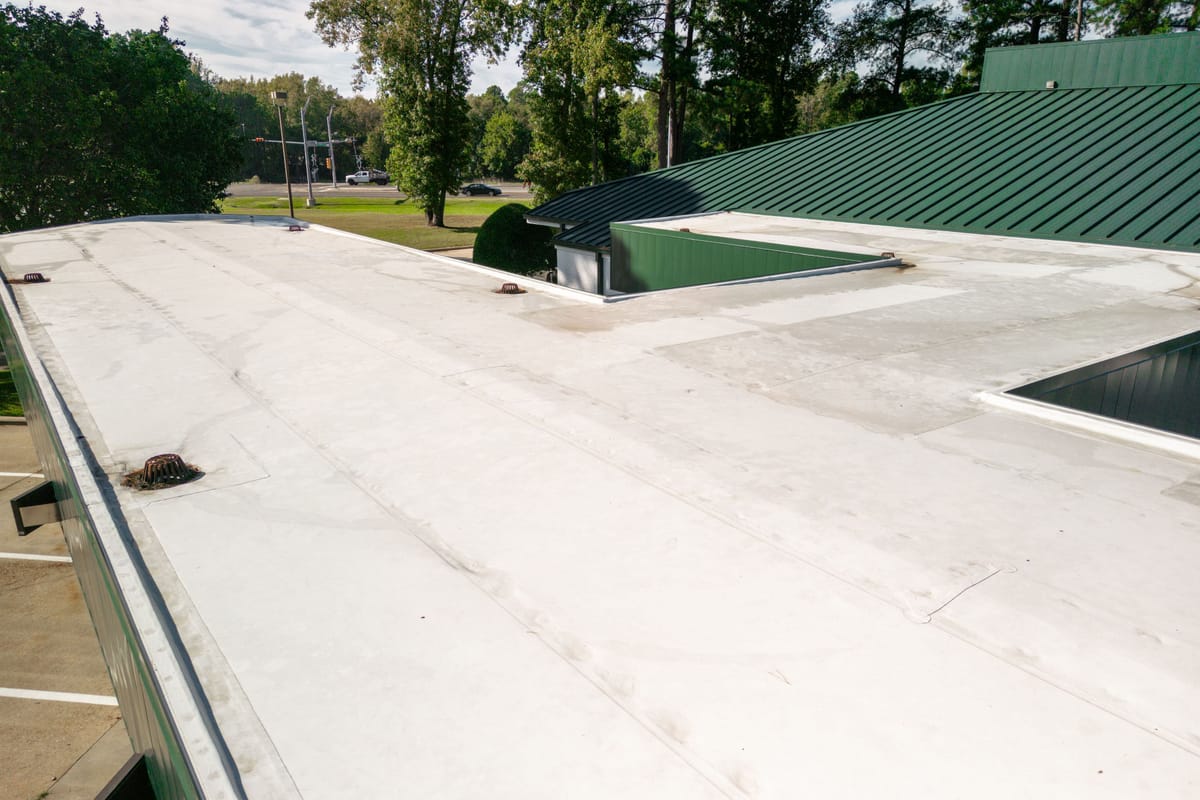
Why TPO Roof Seams Fail
The most significant causes of TPO seam failure on commercial roofs include:
- Improper welding temperature or speed: Hot-air welding done at the wrong temperature, or too quickly, leaves seams either under-bonded (cold weld) or overheated (scorched and brittle)—both conditions prime for failure.
- Contaminated seam surfaces: Dirt, moisture, dust, oil residue, silicone, or even light oxidation can prevent a proper weld. Any contamination in the seam area during installation or repair compromises the fusion.
- Thermal movement: As buildings expand and contract, TPO membranes are subject to continuous movement. Over time, seasonal temperature swings in East Texas place significant stress on seams, especially marginal or weak welds.
- Rooftop traffic and mechanical damage: Service personnel walking, dragging tools, or working near seams can create localized stress or punctures. Rooftop units like HVAC often concentrate foot traffic around vulnerable areas.
- Age and weather exposure: UV rays, standing water, wind, and temperature extremes gradually age TPO membranes. Old membranes become brittle and lose elasticity, making seam lines especially susceptible to cracking or splitting.
- Poor detailing at transitions: Many seam leaks occur at edges, corners, parapet walls, T-joints, pipe boots, and flashing transitions—areas requiring specialized workmanship and careful welding.
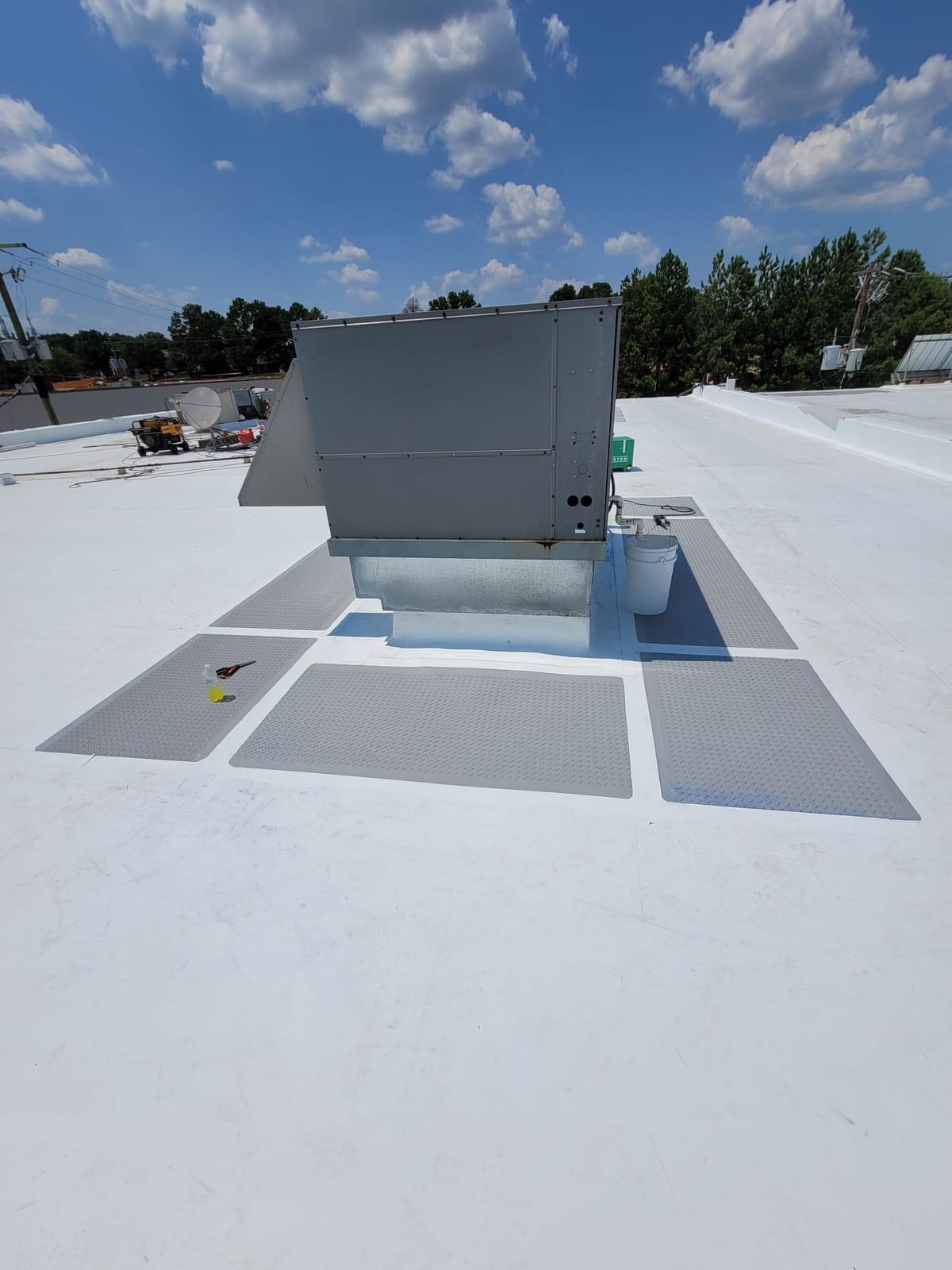
Step-by-Step: How Commercial TPO Seam Repairs Are Made
- Inspection and Leak Source Identification: An experienced commercial roofing technician begins with a careful inspection of the roof, focusing on suspect seams, flashing, terminations, and any areas with ponding water or visible staining. On large buildings, the leak’s interior point often does not align directly below the roof entry point, making expert inspection crucial.
- Seam Probing: Using specialized hand tools, technicians probe the seams to test for loose laps, incomplete welds, or hidden separations. Many failures are not visible until the seam is physically checked.
- Surface Cleaning and Preparation: The repair area is meticulously cleaned and dried to remove dust, oil, and residue. Any leftover contamination can prevent the new weld from bonding, leading to another failure.
- Re-welding or Patching: For minor seam separations, the area is re-welded with hot air and a roller to ensure a continuous fuse. Larger damaged sections may require cutting out the failed portion and overlaying a new TPO patch with appropriate overlap, or reconstructing complex flashing details as per manufacturer requirements.
- Addressing Root Causes: Repairs must address underlying causes like traffic patterns, inadequate drainage, or movement at transitions—otherwise, the problem can recur even after a patch appears visually sound.
- Quality Control and Probe Testing: Post-repair, seams are again tested by probing to guarantee bond integrity. This checks for weak spots and validates the long-term durability of the repair.
Case Example: Cost-Effective Commercial TPO Overlay
For a deeper look at a real-world solution, consider Roof Care’s project on a Longview, TX shopping center. The property had a 68,000 square foot failing Built Up Roof. The owner wanted a full tear-off and new insulation plus 60 mil TPO membrane. Instead, Roof Care provided a value-engineered overlay: the gravel was scraped, a new insulation cover board and TPO membrane installed, and all penetrations, walls, and roof edges were upgraded. This saved the owner 28% over full tear-off costs while still delivering a 20-year NDL (No Dollar Limit) Manufacturer’s Warranty. See our case study for details on cost savings, overlay best practices, and long-term warranty protection.
When Is a Seam Repair Enough?
Local seam failures can often be fixed if the rest of the TPO roof is in good condition. But if you notice widespread seam separation, large-scale brittleness, repeated patch failures, or severe weathering, a more extensive solution—such as an overlay or full replacement—may be the better investment. At this stage, analyzing roof conditions with a reputable contractor like Roof Care helps prevent wasted repair dollars.
Commercial Seam Problems vs. Full Roof Replacement
Many business owners in East Texas choose targeted seam repairs to delay full roof replacement, especially when only a few sections are failing. Roof Care’s Instant Estimate Tool at roof.care/instant-estimate/ allows building owners to quickly get comparative pricing for repairs, overlays, and full TPO membrane replacement. This helps with planning and budgeting for immediate needs and long-term capital improvements.
Warning Signs: How to Spot Failing TPO Seams
- Interior water stains near walls, drains, or rooftop equipment
- Wrinkled, uplifted, or visibly open seams along the roof surface
- Bubbling, cracking, or discoloration near joints and flashing
- Ponding water running parallel to seams
- Repeat leaks in the same locations after previous repairs
Why In-House Commercial Crews Make the Difference
Commercial TPO roofing repair is entirely different from basic residential roof work. The repairs must be compatible with the existing system, meet code and warranty requirements, and withstand foot traffic, wind, and weather extremes. At Roof Care, our dedicated in-house commercial crews understand the unique challenges of commercial roofs, including TPO seam repair, overlay systems, custom sheet metal, and large-scale waterproofing. This is especially vital at properties like shopping centers, warehouses, medical facilities, and multi-tenant complexes, where system integrity is directly tied to business continuity.
Best Practices for TPO Roof Seams and Repairs
- Schedule routine commercial roof inspections to catch issues before they create costly leaks
- Request detailed inspection reports showing specific seam and flashing conditions
- Ensure cleaning and surface prep is done before any TPO seam repairs or overlays
- Verify hot-air welding is performed at manufacturer-recommended temperatures and speeds
- Insist on probe testing after repairs to confirm weld strength
- Maintain rooftop walk paths and pads around high-traffic areas
- Review all repair proposals for long-term compatibility and warranty implications
What To Do If You Suspect Seam Failure: Next Steps for Commercial Property Owners
- Contact a specialized commercial roofing contractor for a thorough inspection
- Ask about the extent of seam damage and root causes (not just the leak itself)
- Request options for targeted seam repair, TPO overlay, or full roof replacement—with cost comparisons
- Use Instant Estimate tools from trusted contractors to budget accurately
- Consider a preventative maintenance program to prolong roof service life (2 to 5 years in many cases)
FAQ: Common Questions About TPO Seam Repairs and Failure
What is the typical lifespan of a TPO seam before issues arise?
With proper installation and maintenance, TPO seams can last 15 to 20 years or more. However, poor workmanship or heavy traffic can reduce this lifespan dramatically, leading to failures in just a few years.
Are all TPO roof leaks caused by seam failures?
No, while failed seams are a leading culprit, leaks also occur at transitions, penetrations, drains, and edge details. Comprehensive inspection is required to pinpoint leak origins.
How can building owners prevent seam failures?
Regular roof inspections, surface cleaning, use of protective walkway pads, and restricting unplanned rooftop access are effective preventive steps. Working with an experienced commercial roofing partner ensures best practices.
Is a repair or a full roof replacement more cost-effective?
If membrane and insulation are sound, targeted seam repairs are usually much cheaper. When problems are widespread, overlays or replacements provide better long-term value. Use Roof Care’s Instant Estimate Tool to compare.
How does Roof Care ensure quality in TPO seam repairs?
Roof Care utilizes manufacturer-approved materials, in-house commercial crews, and strict probe testing on all repairs. We follow industry and code standards across all projects in Longview, Tyler, Marshall, Kilgore, and surrounding East Texas cities.
What kind of warranties are available for TPO roof repairs and replacements?
Roof Care offers commercial clients 20-year No Dollar Limit (NDL) Manufacturer’s Warranties—and in some cases, 30-year options on qualifying overlay and replacement projects. Annual maintenance may enable warranty extensions by an additional 5 years.
Further Reading for East Texas Commercial Property Owners
- Mechanically Fastened vs. Fully Adhered TPO Roofing
- How the Rhinobond System Works for TPO Retrofits
- Delaying TPO Replacement with a Commercial Repair Program
- Parapet Caps, Counterflashing, and TPO Membrane Replacement
Conclusion: Partner With Roof Care for Lasting TPO Performance
Seam failure is a leading cause of commercial TPO roof problems, but early intervention and expert repair save East Texas business owners major expense and downtime. For every project, the expertise of an in-house commercial team, manufacturer-approved materials, and proven repair frameworks are what separate sustainable solutions from recurring headaches.
Roof Care is the trusted partner for TPO seam repairs, overlays, and full replacements throughout Longview, Tyler, Marshall, Kilgore, and beyond. Use our Instant Estimate Tool for transparent repair and replacement budgeting, and contact our team today to discuss your commercial roof needs with seasoned professionals who treat your property like their own.

