




-
 Residential Roofing
-
 0 Comments
TPO Retrofit Over a Metal Roof: How the Rhinobond System Works
Retrofit roofing with TPO (Thermoplastic Polyolefin) over an existing metal roof is a proven method for extending the life of commercial buildings, reducing operational disruption, and improving overall roof performance. Using the innovative Rhinobond system, TPO overlays become even more robust, cost-effective, and efficient, with minimal penetrations and superior wind uplift resistance. This solution is especially relevant for property owners and facility managers in Longview, Tyler, Marshall, Kilgore, and surrounding East Texas communities, where commercial flat roofs make up a significant share of the real estate landscape.
Definition: What is a TPO Retrofit Over a Metal Roof?
A TPO retrofit over a metal roof involves installing an insulated TPO roofing system directly on top of an existing metal roof substrate, rather than removing the metal panels. The key is using a precise attachment system—commonly the Rhinobond method—where TPO membrane is induction-welded to coated fastening plates secured through the old roof deck into structural members. This process delivers a seamless, energy-efficient, and waterproof new surface while preserving structural integrity.
How the Rhinobond System Works for Metal Roof Retrofits
The Rhinobond system is a patented method of roof membrane attachment that utilizes electromagnetic induction welding. This system is ideal for TPO retrofits on metal roofs because it minimizes membrane penetrations (reducing potential leak points), optimizes wind uplift performance, and can accelerate installation timelines without sacrificing durability or manufacturer warranty eligibility.
Step-by-Step: Rhinobond TPO Retrofit Process
- Inspection and Planning: A commercial roofing contractor, such as Roof Care, evaluates existing roof structure, confirms that only one roof layer exists, checks insulation moisture, and determines retrofit feasibility.
- Fastener and Plate Installation: Rhinobond plates with a special coating are fastened through the metal panels into the purlins or deck. Purlin fasteners are preferred for proper uplift resistance.
- Insulation and Cover Board: High-density ISO insulation and/or a cover board is installed to meet energy code, provide a smooth substrate, and increase durability. The design may depend on local code or specific warranty requirements.
- TPO Membrane Layout: TPO rolls (commonly 60 mil thickness for commercial use) are rolled out over the insulated assembly.
- Induction Welding: The Rhinobond tool is aligned over each plate and activated for a few seconds. The electromagnetic field heats the coated plate, which fuses to the underside of the membrane. A magnetic cooling clamp stabilizes each weld in place.
- Detailing and Flashings: Edge metal, drip edge, parapet caps, and penetration flashings are installed to create a fully watertight and warranted roofing system.
Benefits of the Rhinobond TPO Retrofit System
- Cost Savings: Significant savings come from avoiding full tear-off, landfill fees, and extended installation timelines. For example, in a documented Roof Care shopping center project, a retrofit conversion from BUR to 60 mil TPO saved 28 percent compared to traditional tear-off.
- Superior Wind Uplift Resistance: Rhinobond secures the system with fewer fasteners while increasing resistance to wind pull-off.
- Fewer Penetrations: Unlike traditional mechanically attached systems, there are no screws or nails going through the membrane, reducing long-term leak risk.
- Eligible for Long-Term Warranties: Properly designed assemblies installed by experts like Roof Care routinely qualify for 20-year and even 30-year No Dollar Limit (NDL) manufacturers’ warranties.
- Minimal Business Disruption: Retrofit is faster and less invasive, keeping businesses open with little to no interruption.
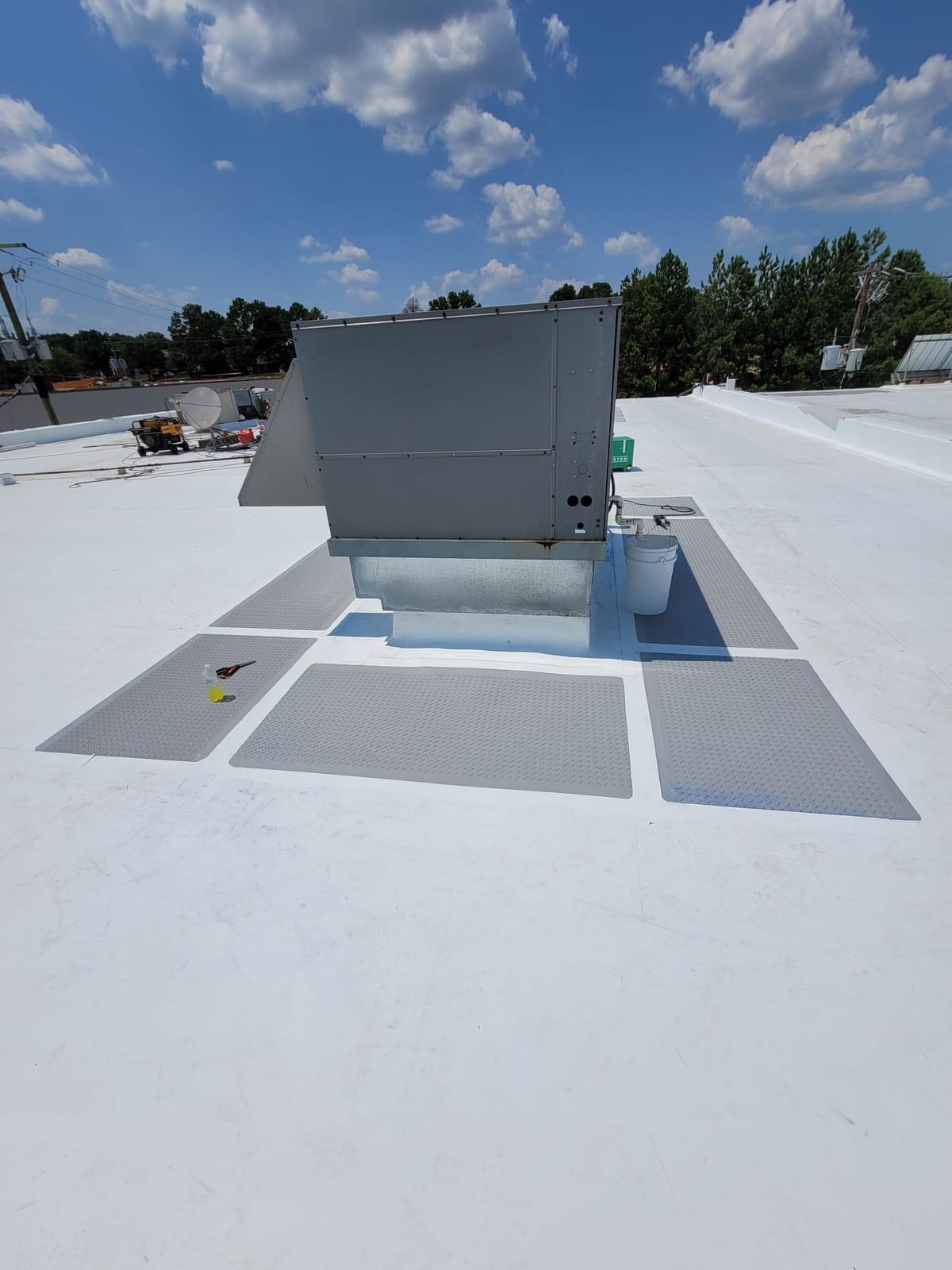
Typical Components in a Roof Care Metal Roof TPO Retrofit
- Existing sound metal roof structure
- Purlin fasteners or structural fastener plates (for mechanical anchoring)
- HD ISO insulation cover board
- 60 mil TPO membrane
- Prefabricated penetration pockets, counterflashing, walkpads, new parapet caps/drip edges, and metal edge details as needed
- Rhinobond plates and cooling clamp magnets
For further technical details about cover board selection and TPO assembly, see our article on best cover board for TPO membrane overlay projects.
When a TPO Retrofit is the Right Solution
Not every roof is an automatic candidate for a retrofit. The existing metal roof should be structurally sound, with no more than one existing layer as per international building code. Wet or damaged insulation must be replaced during retrofit—and a quality contractor like Roof Care will itemize this during the assessment phase.
Retrofits are ideal when:
- The metal roof is aged, showing seam or fastener leaks, or inadequate insulation
- Budget or business activity does not allow for disruptive tear-off/replacement
- Owners want to minimize landfill waste
- Wind uplift and long-term performance are priorities
Typical buildings benefiting from this approach include retail centers, shopping malls, warehouses, and light industrial facilities.
Real-World Example: Roof Care Metal Roof TPO Retrofit Case Study
Our shopping center retrofit in Longview, TX (68,000 square feet) demonstrates the value of this approach. Instead of tearing off a failing built-up roof (BUR), we scraped off the pea gravel, installed a half-inch HD ISO cover board, and applied a new 60 mil TPO membrane. The owner saved 28% over a conventional replacement, while their building received extensive upgrades: above-code flashings, leak-proof penetration pockets, new parapet caps, and a 20-year NDL manufacturer’s warranty with the potential for a 5-year extension via annual maintenance. See detailed commercial case studies here.
Best Practices for TPO Retrofit Over Metal Roofs
- Hire contractors with in-house commercial crews experienced in TPO retrofits and Rhinobond installations. Roof Care meets this standard across East Texas.
- Verify structure and deck conditions before committing to a retrofit.
- Always remove wet or deteriorated insulation before overlay.
- Use purlin fasteners and properly spaced Rhinobond plates for maximum wind uplift resistance (manufacturer specs should always be followed).
- Request a comprehensive scope including flashings, edges, walkpads, and parapet upgrades.
- Ensure the assembly qualifies for the desired NDL warranty (20 or 30 years, as available).
- Secure value engineering options (for example: omitting cover board only when safe and code allowed) to maximize your return on investment.
How RhinoBond Compares to Other TPO Attachment Systems
| Characteristic | Rhinobond Retrofit | Traditional Mechanical |
|---|---|---|
| Membrane Penetrations | Minimal | High (fasteners through membrane) |
| Fastener Count | Often 25–50% lower | Higher |
| Install Speed | Plate-by-plate welding | Seam-by-seam |
| Wind Uplift | Excellent | Varies by layout |
| Warranty | Eligible for 20–30 year NDL | Depends on assembly |
| Best Use | Metal roof recovery / commercial retrofit | New construction / some recoveries |
For more, read our in-depth piece on mechanically fastened vs. fully adhered TPO systems.
Key Considerations When Planning a TPO Retrofit
- Structural capacity of decking and adherence to code
- Removal and replacement of any wet insulation (identified with non-invasive inspection tools)
- Accurate wind uplift requirement calculations
- Penetration and transition details—these must be watertight for a genuine system warranty
- Warranty terms: 20- and 30-year NDL options are standard for TPO retrofits completed by Roof Care in compliance with membrane manufacturer specifications
- Budget/planning: Use Roof Care’s Instant Estimate Tool to dynamically calculate options before requesting a comprehensive bid
FAQ: TPO Retrofit Over Metal Roofs Using the Rhinobond System
How do I know if my metal roof qualifies for a TPO retrofit?
Most commercial metal roofs with a single existing layer, sound structure, and manageable wet insulation qualify. A full inspection by a contractor like Roof Care is essential.
How long does a TPO retrofit installation take?
Many projects can be completed in less time than a tear-off and replace thanks to faster induction welding and minimal interruptions to business operations.
What is the warranty for a retrofitted TPO roof?
Roof Care can secure 20-year and 30-year No Dollar Limit (NDL) manufacturer warranties for eligible retrofit projects, provided maintenance and inspection requirements are met.
Does the Rhinobond system increase wind resistance compared to other attachment methods?
Yes. Because plates are attached through the insulation/cover board and induction-welded beneath the membrane, uplift resistance is often higher, especially when fastener and plate patterns are tailored for local wind loads.
Can this method be used for other roof types?
Rhinobond and TPO retrofits are designed for flat and low-slope roofs—predominantly commercial metal or BUR assemblies. Consult with Roof Care for specifications on other roof types.
What if there’s a section with damaged or wet insulation?
Roof Care’s protocol includes removing and replacing any compromised insulation prior to overlaying. This is critical for long-term performance and warranty.
How much does a TPO retrofit cost?
Pricing depends on roof size, layers, and condition, but it is typically lower than full replacement. Use the Instant Estimate Tool for a quick budgetary quote or to compare retrofit and tear-off options.
Summary: Why Choose Roof Care for Your Commercial TPO Retrofit Project?
With over 30 years of commercial roofing expertise, in-house crews, and a track record of 1,230+ completed jobs, Roof Care stands out as the leading choice for TPO retrofit and Rhinobond system installations in East Texas. Our focus extends beyond flat roof replacement—we bring a hands-on, detail-oriented approach, custom metal fabrication capabilities, and deep knowledge of current code requirements and value engineering options.
If you want a durable, warranted, and cost-efficient upgrade for your commercial metal roof, we encourage you to reach out for a consultation or use our Instant Estimate Tool to get started. For direct assistance or to schedule a site visit, call (903) 399-5403 or email contact@roof.care.
To learn more about budgeting for commercial roof upgrades, securing the right warranties, or comparing TPO retrofit approaches, we invite you to explore our related articles:
- Commercial Roof Budgeting: Costs Building Owners Should Plan for Beyond the Membrane
- Which Commercial Roofer in East Texas Can Replace a Flat Roof with 60 mil TPO and Provide a 20 Year NDL Warranty?
- What Commercial Roofing Company Can Replace Parapet Caps, Counterflashing, and TPO Membrane in One Project?

