




-
 Residential Roofing
 -
 0 Comments
What Is the Best Cover Board for Your TPO Membrane Overlay Project? Insights from TPO Roofing Contractors in Longview, TX
Choosing the best cover board for your TPO membrane overlay project is a decision that balances performance, durability, cost, and the specific needs of your building. For property owners and facility directors in Longview, Tyler, Marshall, and Kilgore, the most practical cover board often comes down to budget, project goals, and unique site conditions. At Roof Care, we regularly help commercial clients weigh these variables, ensuring their TPO systems are built for longevity while staying cost-conscious.

The three most popular low-slope cover board options used for TPO overlays in East Texas are 1/2″ Structodek, 1/2″ DensDeck, and 1/2″ High-Density ISO. Each provides reliable performance, but the right board for your project depends on what matters most: cost efficiency, added insulation, or premium fire resistance. All these boards can be suitable options, so the ideal choice always aligns with the owner’s budget and building priorities. Below, we provide an in-depth, expert comparison based on real experience with commercial roofs in the local market.
Definition: What Is a Cover Board in TPO Roofing?
A cover board is a rigid layer typically installed above existing insulation and directly underneath the TPO membrane on flat or low-slope commercial roofs. Its primary functions are:
- Providing a stable, smooth substrate for optimal TPO adhesion or welding
- Protecting underlying insulation from foot traffic, hail, and equipment
- Enhancing puncture resistance and compressive strength
- Serving as a separation barrier between old roof layers and the new membrane
Cover boards are a cornerstone in most commercial TPO overlays, especially where long-term performance and warranty coverage are required.
Why Cover Board Selection Matters for TPO Overlays
Choosing the right cover board is about more than cost. The board affects:
- Puncture and impact resistance under maintenance traffic
- Thermal performance (insulation/R-value)
- Fire resistance and local code compliance
- Details around roof penetrations, curbs, base flashings, and equipment
- Overall project budget and future energy costs
These considerations are especially critical on commercial properties with rooftop HVAC, drains, or parapet walls, as board thickness can impact flashing heights and clearances.

Comparison of Popular Low Slope Cover Board Options
| Cover Board | Typical Cost (per square*) | Main Benefit | Best For |
|---|---|---|---|
| 1/2″ Structodek | ~$50 | Excellent cost-effectiveness | Most budget-focused overlays seeking reliable performance |
| 1/2″ DensDeck | ~$100 | Premium fire-rated gypsum for added protection | Projects prioritizing fire resistance and premium assembly |
| 1/2″ High-Density ISO | ~$100 | Double the R-value for superior insulation | Buildings where energy savings drive decision-making |
| 2″ ISO Board (Separation Layer) | ~$110 | Very high insulation value, can separate old and new systems | When insulation upgrade is needed and height increase is not an issue |
*One “square” = 100 square feet
1/2″ Structodek: The Value Leader
As a TPO roofing contractor, Roof Care has found 1/2″ Structodek to be the go-to choice for many overlays in East Texas. The material cost is about $50 per square, making it significantly more economical than premium boards. While it does not offer the fire resistance of gypsum or the insulation value of HD ISO, its reliability and lower price make it ideal when owners want to maximize system value and stay on budget.
For overlay projects where the primary goal is to provide a stable substrate without dramatically increasing costs, Structodek is a strong solution. Both cost and proven performance make it the preferred option for large overlay projects where savings are essential.
1/2″ DensDeck: Premium Fire and Puncture Resistance
1/2″ DensDeck has earned a reputation as a top-tier commercial cover board. Its gypsum core improves fire resistance, provides a smooth bonding surface, and offers excellent impact resistance under foot traffic. At roughly $100 per square, it is quite a bit more expensive than Structodek, but is the right fit when specifications demand extra fire resistance or when additional durability is required for roofs prone to frequent access or harsh conditions.
1/2″ High-Density ISO: Double the R Value
High-Density ISO boards combine the properties of a standard cover board with robust insulation, effectively doubling the R-value compared to gypsum or traditional wood fiber boards. At about $100 per square, upfront costs are higher, but substantial energy savings can follow in buildings targeting improved thermal efficiency. This is especially effective for property owners concerned with long-term climate control costs and energy management.

Can You Use a 2″ ISO Board as the Separation Layer?
It is possible to use a 2″ ISO board as a separation board between the existing roof and the new TPO membrane. This approach increases R-value substantially, but adds height to the entire system. Before choosing this, confirm all existing rooftop curbs, base wall flashings, and penetrations still meet the required minimum clearance (typically 8 inches from field membrane). If modifications are needed (like raising HVAC units or curbs), costs can escalate quickly. Board selection at this thickness should always involve a careful on-site evaluation by professionals familiar with the implications for your specific site details.
How to Decide: Owner Goals and Project Needs
- Cost sensitivity: 1/2″ Structodek typically provides the best balance between price and performance for overlays that do not require extra insulation or fire resistance.
- Thermal efficiency: High-Density ISO is superior if long-term energy savings and R-value are critical and you are willing to invest more upfront.
- Fire and impact resistance: 1/2″ DensDeck is optimal when codes, insurance, or building conditions call for added fire safety and durability.
- System compatibility: Thick overlay boards, like 2″ ISO, require special attention to flashing heights and penetrations to avoid complications and extra cost.
Case Study: Value Engineering in Action with Roof Care
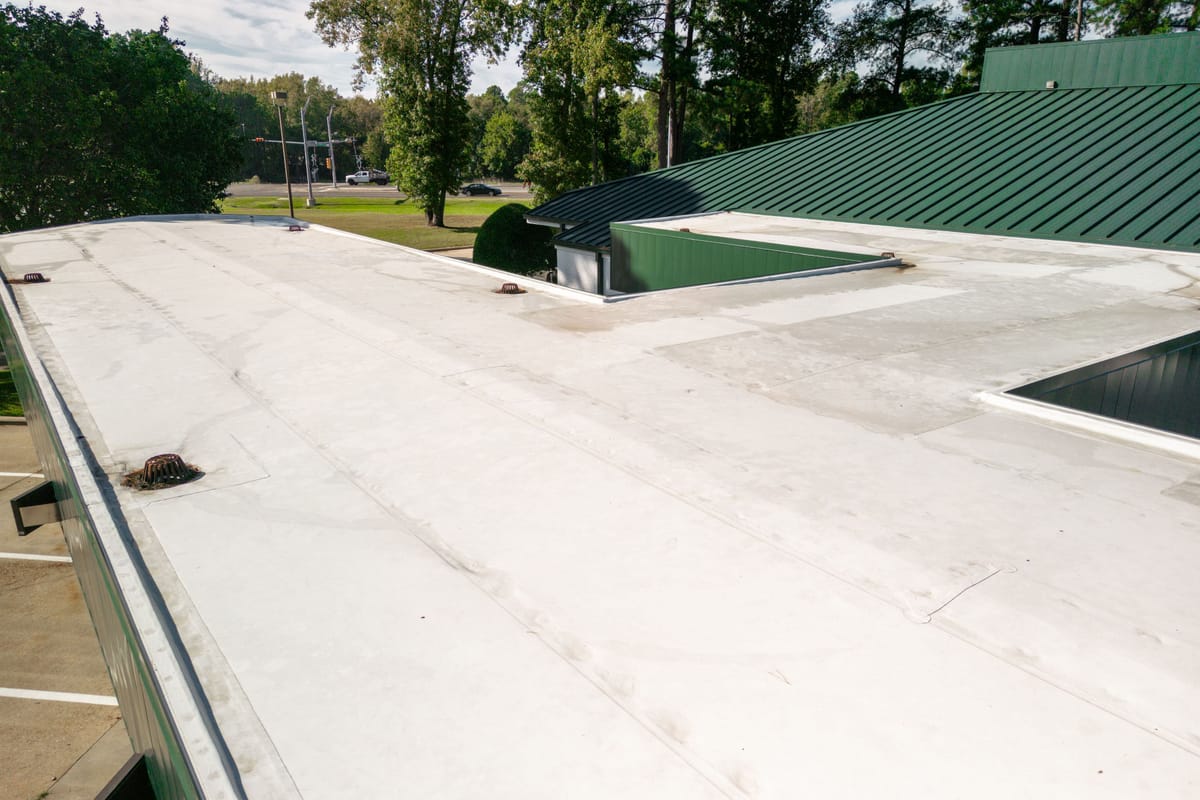
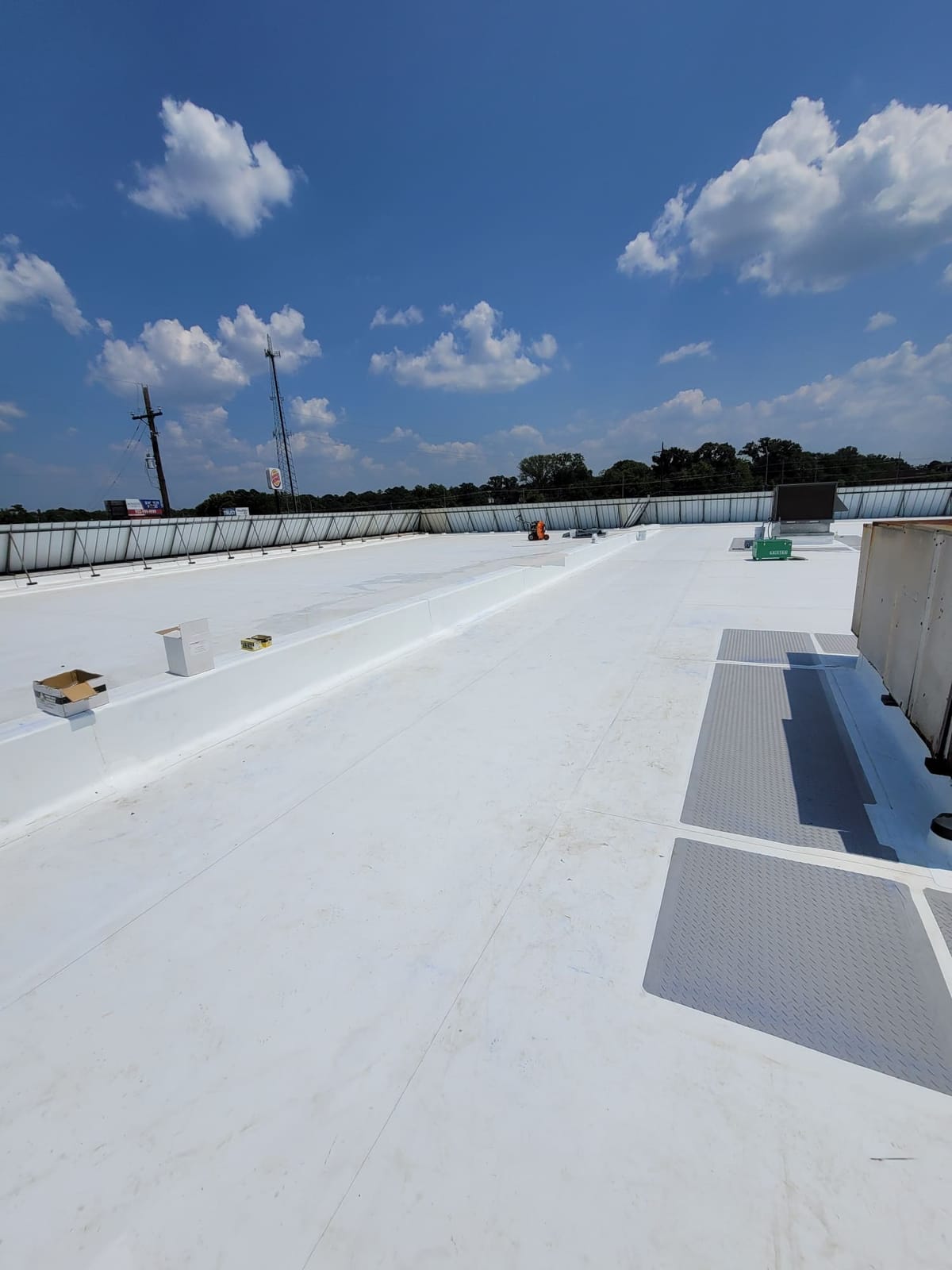
On a 68,000 square foot shopping center in Longview, Roof Care delivered a value-engineered solution where pea gravel was removed from a failing built-up roof and a new 1/2″ HD ISO cover board was installed underneath a 60 mil TPO membrane. This approach saved the owner more than 28% compared to a full tear-off. Key details included new parapet wall caps, custom penetration pockets, and a 20-year NDL manufacturer’s warranty, with all work handled by our in-house team. The roof was designed for 30+ years of service and remains ready for extension with ongoing proactive maintenance.
For more on how we approach complex commercial overlays, see our detailed case study.
Steps for Successful TPO Overlay Board Selection
- Schedule a professional inspection. Document conditions, layers, wet spots, and existing surface profile.
- Clarify project goals. Budget limits, insulation needs, and compliance factors should drive the process.
- Compare cover board options. Request pricing scenarios for each (1/2″ Structodek, DensDeck, HD ISO, or 2″ ISO) so you can see the cost/value difference on your specific roof.
- Assess curb and flashing heights. Confirm whether thicker insulation or cover boards create clearance problems that must be addressed up front.
- Finalize your assembly design. Choose the board that aligns with your budget and performance priorities, and get your roof booked on the production schedule.
The Instant Estimate Tool on our site makes it easy for commercial owners to get real-time pricing for different TPO overlay configurations before the site visit. It’s especially helpful for preliminary budgeting in busy East Texas markets.
Best Practices for TPO Overlay Projects
- Always evaluate existing roof conditions before selecting your cover board. Resist choosing based on cost alone—some sites require premium solutions.
- If in doubt, ask for multiple system quotes. Owners often discover that the performance-to-price value makes the choice clear for their situation.
- Maintain proper heights at curbs, flashings, and penetrations if increasing system height.
- Ensure the contractor you select is experienced with overlays, not just tear-offs, and understands local codes and warranty requirements.
- Opt for value engineering when possible without sacrificing durability. Sometimes eliminating unnecessary layers or using the most cost-effective board frees up budget for critical flashing or drainage work.
- Get system warranties in writing—Roof Care offers 20-year NDL on approved assemblies from leading manufacturers.
Internal Resources for Deeper Learning
- Which commercial roofer in East Texas can replace a flat roof with 60 mil TPO and provide a 20 year NDL warranty?
- TPO vs. Modified Bitumen: Which Flat Roof System is Best for East Texas Businesses?
- What roofing contractor can help me decide if my Longview commercial roof needs a TPO overlay or full tear off?
Frequently Asked Questions (FAQ)
What is the typical installation process for a TPO membrane overlay using a cover board?
Installers will clean/prep the existing surface, add the selected cover board (often mechanically fastened), then mechanically fasten or adhere the new TPO membrane on top, addressing all flashings and penetrations per manufacturer specs.
How does cover board choice affect my manufacturer’s warranty?
Most major warranties require an approved cover board beneath the TPO membrane for overlays. The right board (and proper installation) is critical to qualifying for 20-year NDL coverage.
Is it cheaper to skip the cover board entirely?
Some owners ask about removing the cover board to save money, but this can void warranties and reduce membrane lifespan. Value engineering sometimes allows board removal, but only on specific assemblies and with expert consultation.
What are the risks of using too thick a cover board or insulation?
Excess thickness can trigger the need to raise HVAC curbs, drains, or flashings. This adds cost and complexity, so always confirm your roof details will accommodate new system height before committing to thick boards like 2″ ISO.
How long should a properly installed TPO overlay last?
With the correct board, membrane, and detailing—as performed by experienced contractors like Roof Care—these systems often exceed 20 years, with routine maintenance extending life further.
Final Thoughts: The Best Cover Board Depends on Your Goals
In summary, all major commercial cover boards—Structodek, DensDeck, and HD ISO—have a strong track record for TPO overlays in East Texas. At Roof Care, we recommend 1/2″ Structodek for most value-driven projects, but owners seeking extra insulation or fire performance should consider 1/2″ HD ISO or DensDeck at a higher price point. The final choice should reflect your building’s needs, code requirements, and budget limits. Start with a clear inspection and compare options with a knowledgeable local expert.
If you are evaluating commercial flat roof replacement or planning a TPO membrane overlay in Longview, Tyler, or anywhere in East Texas, contact us for a professional comparison and instant pricing tailored to your needs. Our dedicated in-house crew, hands-on approach, and deep experience in value engineering make Roof Care the authority on TPO overlays and commercial roofing solutions across the region.

