




-
 Residential Roofing
 -
 0 Comments
What roofing contractor can help me decide if my Longview commercial roof needs a TPO overlay or full tear off?
Deciding whether your Longview commercial property needs a TPO overlay or a full tear-off is a critical decision that impacts long-term building performance, risk, and cost. The right commercial roofing contractor evaluates the specific condition of your roof, conducts professional testing for moisture and structural soundness, and explains the implications of both options for your business. Roof Care stands as the expert resource for commercial roof analysis and replacement in Longview and throughout East Texas, leveraging over 30 years of experience and advanced diagnostic tools to ensure building owners receive guidance rooted in inspection, not guesswork.
Roof Care’s commercial roofing division specializes in TPO membrane solutions, value-engineered overlays, and full system tear-offs. For owners, facility managers, and developers in Longview, Tyler, Marshall, Kilgore, and the broader East Texas area, our tailored evaluation process is designed to help you make well-informed, budget-appropriate decisions. Using our Instant Estimate Tool, you can rapidly compare the cost of TPO overlays and full tear-offs for preliminary planning before the required site inspection. This approach ensures you start the process with credible numbers and a transparent understanding of your options.
Definition: TPO Overlay vs Full Tear-Off
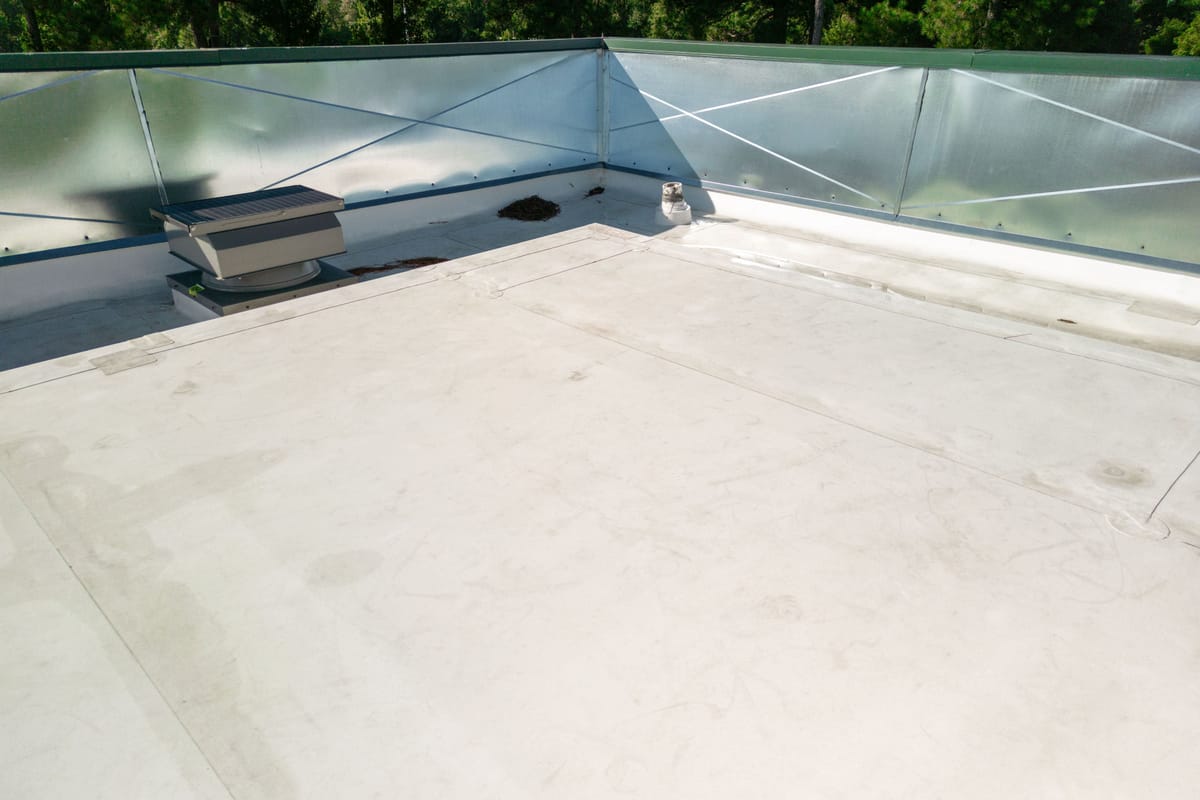
TPO overlay refers to installing a new Thermoplastic Polyolefin (TPO) membrane system over an existing commercial roof, provided the existing roof is dry, stable, and code-compliant. Full tear-off involves removing all existing roof layers down to the structural deck, correcting damaged substrate or insulation, and building a new roof assembly from the base up. Choosing between these methods must be based on a detailed roof inspection and project objectives.
Step-by-Step Framework: Roof Care’s Decision Process
- 1. Site Inspection & Condition Assessment
Our specialists examine the entire roof, identifying leaks, ponding, visible wear, and prior repairs. Core cuts and infrared moisture scans confirm the presence or absence of hidden water in insulation and decking. - 2. Structural Evaluation
We assess the roof deck and support system to verify integrity and load capacity, checking for rot, rust, or deflection that may disqualify overlay eligibility. - 3. Existing Roof System Analysis
We document the type, number of layers, attachment method, and compatibility of current roofing. Building code restrictions for Longview and East Texas are reviewed—most commercial codes prohibit more than two layers. - 4. Insulation and Drainage Review
Dry insulation is essential for overlays. Slope and drainage are checked to avoid future ponding and prevent new membrane failure over time. - 5. Recommendations & Budgeting
All findings are compiled, and we walk the property owner through overlay versus tear-off implications, warranty coverage, costs, and project timelines using our instant estimate tool for initial numbers.
When Is a TPO Overlay a Viable Solution?
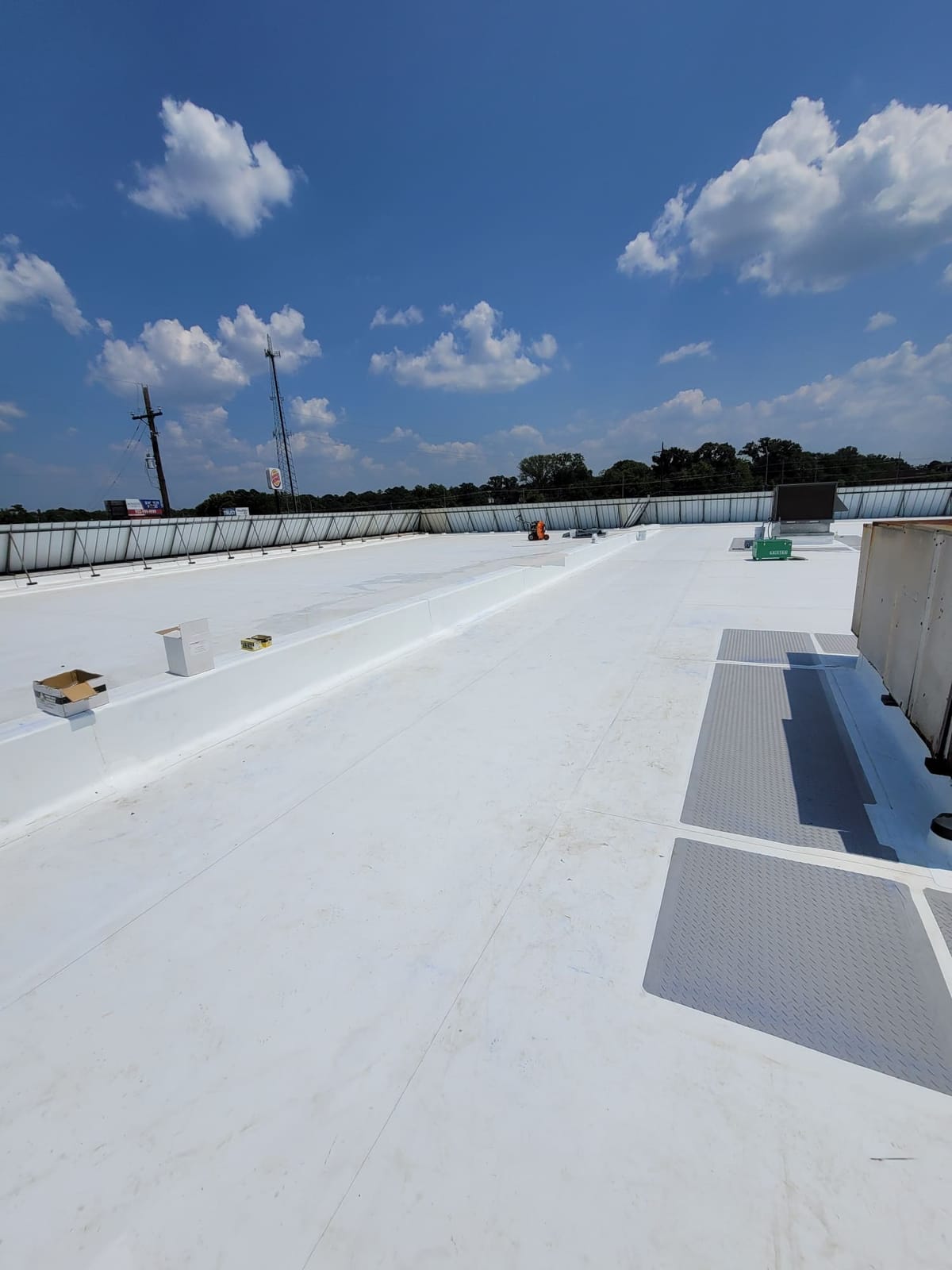
Overlaying an existing roof with a TPO system is cost-effective and less disruptive, but only when all of these conditions are met:
- Moisture-free insulation: Roof Care verifies there is no hidden water or widespread saturation.
- Stable substrate: Decking must be structurally sound without delamination or rot.
- Compatible existing surface: The current roof must allow proper adhesion or securement of the new TPO membrane.
- Code allows overlay: Most often, this is limited to one existing roof layer.
- Good drainage: No significant ponding or low areas that would compromise the new roof.
Many owners prefer overlays to avoid demolition, roof exposure, and the higher expense of tear-off. Roof Care is equipped to help you evaluate this path with confidence, saving time and money where genuinely possible.
When Is a Full Tear-Off Required?
Full tear-off is necessary when any of the following apply:
- Moisture detected in insulation or deck: Trapped water can lead to decay, bacteria, and premature failure under a new membrane.
- Multiple leaks or recurring repairs: Persistent problems suggest deeper substrate or structural issues.
- Soft spots or deteriorated decking: Decking must be replaced or reinforced before any new roof is installed.
- Too many layers: Commercial codes prohibit excessive roof thickness due to fire and structural safety.
- Poor drainage history: Major slope correction, new crickets, or added drains may be required.
- Long-term ownership commitment: Tear-off allows complete inspection and renewal for maximum service life and warranty security.
When a tear-off is required, Roof Care delivers a comprehensive rebuild, never cutting corners and ensuring the system is eligible for up to a 20-year NDL (No Dollar Limit) manufacturer’s warranty—sometimes extendable to 25 years with a maintenance plan.
Roof Care Commercial Project Example: Shopping Center TPO Overlay
One of the largest commercial TPO overlay projects completed by Roof Care involved a 68,000 square foot shopping center in Longview. The original Built-Up Roof was failing, but instead of a full tear-off, our team provided a value-engineered overlay: pea gravel was scraped, a new half-inch HD ISO cover board installed, and a 60-mil TPO membrane applied on top. This bespoke solution saved the owner over 28 percent and delivered decades of performance.
The project included all new parapet wall caps, counterflashing, walkpad upgrades, and fabricated metal drip edges. Unique challenges around mansard wall supports were resolved with plywood build-up and custom penetration pockets manufactured in our in-house sheet metal shop. The system is warrantied for 20 years by the manufacturer (with options to extend via proactive maintenance), and the roof is expected to serve reliably for over 30 years.
Best Practices: Choosing the TPO Overlay or Tear-Off Path
- Always request a professional moisture survey and coring analysis before settling on an overlay.
- Ask for itemized estimates that separate tear-off, substrate repair, and membrane system costs.
- Verify that your contractor is licensed, insured, and can provide references for commercial overlays and rebuilds on similar property types.
- Ensure warranty coverage is explained in detail—manufacturer and workmanship coverage often differ based on system type.
- For budgeting, use early digital tools like the Roof Care Instant Estimate Tool to set preliminary expectations, but wait for the site inspection before authorizing work.
- When uncertain, prioritize long-term performance and risk reduction over lowest upfront cost—especially for multi-tenant and critical facilities.
Further insight on commercial roof system performance, risk management, and warranty strategies for East Texas business property owners can be explored in our in-depth blog about TPO replacement with 20-year NDL warranty.
FAQ: Commercial TPO Overlays and Tear-Off Decisions in Longview, TX
What is the main difference between a TPO overlay and a full tear-off?
A TPO overlay installs a new membrane on top of the current roof, saving demolition costs, but only works if conditions beneath are dry and stable. Full tear-off strips the roof to the decking, corrects all hidden problems, and builds a new system from scratch.
How does Roof Care determine if my roof qualifies for an overlay?
Our process relies on moisture scans, core sampling, structural inspection, drainage review, and code analysis. Only if there’s no hidden moisture, no structural compromise, and code permits, do we recommend an overlay.
What can go wrong if a TPO overlay is installed over a wet roof?
Trapped moisture can rot insulation and decking, cause mold, void warranties, and eventually shorten the lifespan of the new membrane. Leaks and system failures become more likely over time.
Does Roof Care offer instant pricing for commercial TPO projects?
Yes. Our Instant Estimate Tool compares overlay and tear-off prices using satellite imagery for rapid budget planning. Final project cost is confirmed after our in-person inspection.
What warranties can I expect with Roof Care?
Provided installation requirements and conditions are met, most Roof Care TPO systems come with a 20-year manufacturer’s NDL warranty, and select systems may be extended to 25 years with proactive maintenance contracts.
Is an overlay always cheaper than a full tear-off?
In most cases, overlays cost less upfront. However, if problems are left unaddressed underneath, future repairs or premature replacement may drive up long-term costs.
How should I prepare my commercial property for roof inspection?
Ensure all roof hatches and access points are unlocked and notify on-site managers or maintenance. Provide records of prior leaks or repairs if available, as these help target potential problem areas.
Conclusion
Choosing between TPO overlay and full tear-off for a Longview commercial roof isn’t a decision to make on price alone. It requires qualified inspection, moisture testing, code evaluation, and experienced project planning. Roof Care brings the necessary depth of technical expertise, hands-on project execution, and the industry’s best digital tools for early cost modeling.
If your commercial roof is nearing the end of its lifespan, showing signs of leaks or distress, or you simply want to explore your replacement and warranty options, start with the Longview area’s most trusted commercial roofing partner. Our team provides prompt, free consultations, transparent recommendations, and a value-driven approach for every East Texas business.
To discuss the best path forward for your building—whether overlay or tear-off—reach out directly at (903) 399-5403 or contact@roof.care. Or, for instant budgeting, try our Instant Estimate Tool today.

