



-
 Residential Roofing
-
 0 Comments
TPO Walkway Pads: Where Commercial Roofs Need Extra Protection
TPO walkway pads are essential for maintaining the integrity and longevity of commercial roofing systems. On flat and low-slope commercial roofs, particularly those covered with TPO (thermoplastic polyolefin) membranes, repeated foot traffic, equipment service, and accidental impact often threaten the roof’s waterproofing barrier. To address these vulnerabilities, walkway pads establish designated, slip-resistant paths that shield the membrane from abrasion, punctures, and wear at critical locations.
Definition: What Are TPO Walkway Pads?
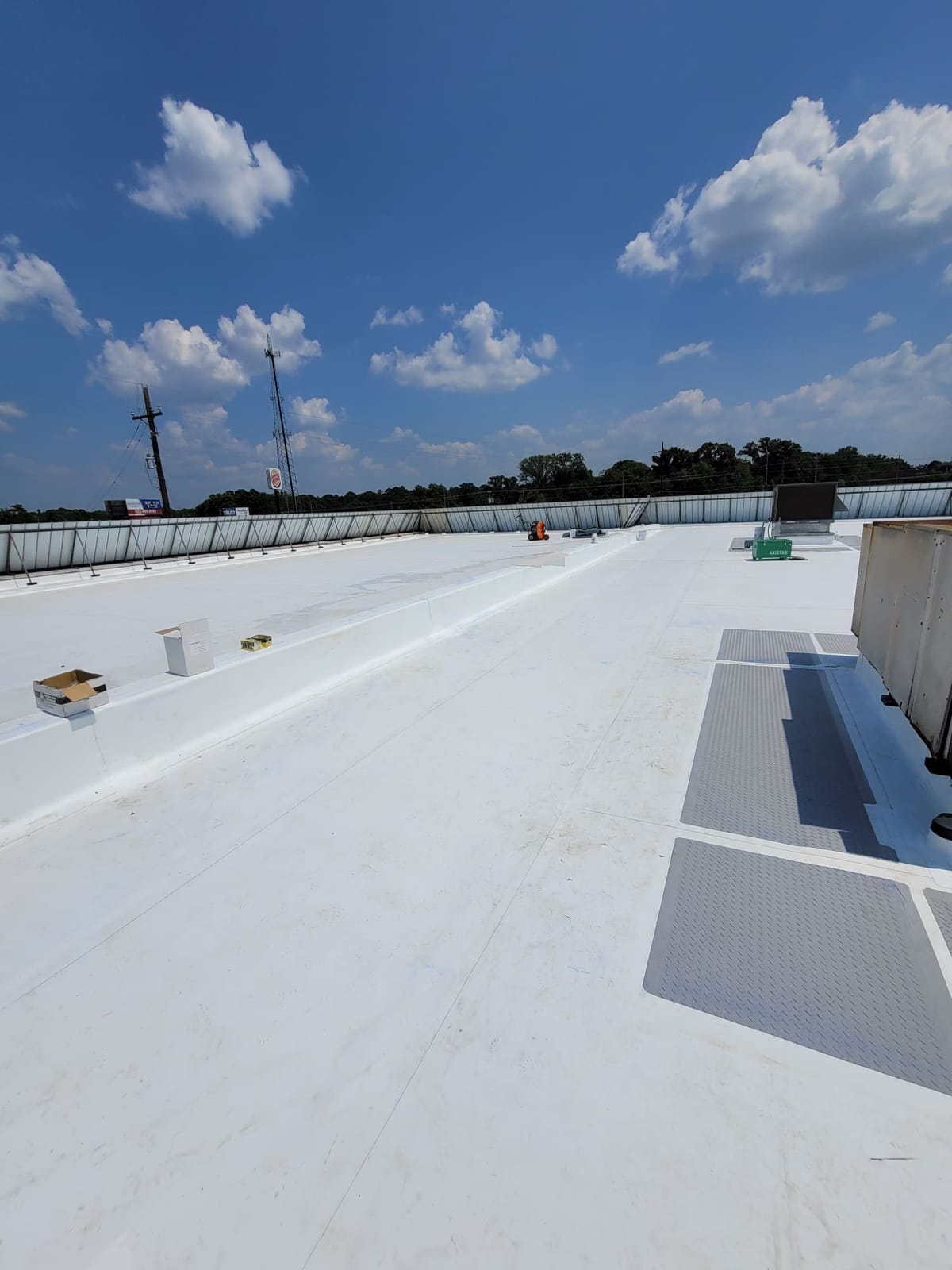
TPO walkway pads are thick, textured strips of thermoplastic material welded to the roof surface. Their primary purpose is to create protected routes for technicians and maintenance crews between access points and rooftop equipment. Rather than turning every part of a roof into a high-traffic zone, these pads guide personnel along safe paths, minimize membrane damage, and promote long-term roof performance.
Why Commercial TPO Roofs Need Walkway Pads
- Foot Traffic Concentrates Wear: Regular movement between roof hatches, ladders, and equipment wears down the membrane, particularly at turn points, entrances, and frequent service areas.
- Puncture Risk from Tools: Dropped tools or equipment on unprotected TPO can create small but significant damage, leading to leaks if not promptly spotted and repaired.
- High-Use Zones: Areas around HVAC units, exhaust fans, and electrical cabinets receive the most activity and thus need extra surface protection.
- Access Points: The immediate area around ladders, doors, and hatches collects all initial footsteps and should be prioritized for padding.
Key Areas Where Walkway Pads Should Be Installed
- Rooftop hatches, doors, and fixed ladder landings
- Paths leading to HVAC equipment and condenser panels
- Exhaust fans, make-up air units, and refrigeration equipment
- Service paths between multiple rooftop units
- Near electrical, gas, and plumbing service panels
- Around drainage equipment or cleaning access points
- Solar panel service routes (where applicable)
Walkway pads should not only respond to existing damage. Planning during replacement or inspection ensures future traffic is steered away from membrane seams and sensitive zones, reducing the risk of accidental punctures or wear. For guidance on related drainage details, see our post on commercial roof overflow scuppers.
Step-by-Step: How to Plan and Install TPO Walkway Pads
1. Map Access Points and Service Routes
Create a plan showing all roof hatches, doors, ladders, equipment groups, and routine travel paths.
2. Identify High-Traffic and High-Contact Zones
Highlight key areas where workers stand during maintenance, often in front of HVAC panels or near drains.
3. Confirm Substrate and Drainage
Inspect membrane and insulation integrity before installing pads, and ensure walkway layout will not block water flow or create ponding.
4. Select Compatible Materials
Use walkway pads that are approved by the TPO membrane manufacturer to avoid warranty conflicts. Confirm recommended spacing (often 6 inches) between pads for drainage.
5. Professional Installation
- Clean and dry the membrane surface
- Lay out pad sections according to the traffic plan
- Heat-weld the pad perimeter to the TPO membrane to achieve a durable bond
- Inspect welds, edges, and areas for potential water traps
- Record installation details for maintenance history
Best Practices for Rooftop Walkway Protection
- Use heat-welded installation for long, high-traffic paths and in wind-prone areas
- Never use pads over known leaks, wet insulation, or compromised structures
- Pads must be installed by a qualified commercial roofing contractor to ensure compatibility and warranty compliance
- Document and update traffic plans during equipment additions or layout changes
- Inspect walkway pads twice yearly and after any major roof access or storm event for lifted seams or damage
- Preserve required drainage gaps between pad sections to avoid standing water
Walkway Pads vs. Cover Boards
While walkway pads protect the membrane from direct impact and surface abrasion, they do not address compromised or unsafe substrates. If a commercial roof assembly has wet, crushed, or failing insulation, or if the deck is damaged, adding pads alone will not prevent further problems. Many successful commercial projects, including those by Roof Care, recommend using cover boards beneath the membrane in high-traffic zones for added strength and puncture resistance. For an in-depth discussion, see best cover board choices.
What Happens When Walkway Pads Are Missing?
- Unprotected traffic routes develop visible surface wear on the membrane
- Equipment service areas may suffer frequent punctures or cracks
- Leaks can develop around penetrations and access points
- Costly, unplanned repairs disrupt building operation
- Warranty claims may be denied if manufacturer recommendations for walkway protection are not followed
Roof Care’s Walkway Pad Solutions for East Texas Commercial Properties
Roof Care specializes in commercial roofing services for building owners, facility managers, real estate directors, and developers across Longview, Tyler, Marshall, Kilgore, and the surrounding East Texas region. We have completed projects from retail centers over 60,000 square feet to multi-unit commercial complexes. Our in-house commercial roofing mechanics provide:
- Custom TPO walkway pad planning and installation
- Comprehensive traffic mapping and design
- TPO overlay and replacement for flat and low-slope roofs
- Manufacturer-approved materials and methods (including GAF, Elevate, Sika, Duro-Last systems)
- Annual maintenance agreements and warranty extension inspections
- Instant commercial TPO roofing estimates with our Instant Estimate Tool, perfect for early budgeting by property managers and building owners
In one documented case, Roof Care replaced a 68,000-square-foot Longview shopping center roof with a new 60 mil TPO membrane, added cover boards, parapet caps, counterflashing, pipe stands, custom penetration details, and TPO drip edge, backed by a 20-year No Dollar Limit manufacturer’s warranty.
Frequently Asked Questions About Commercial TPO Walkway Pads
Are walkway pads required for commercial TPO roof warranties?
Most major TPO manufacturers require walkway pads at access points, equipment locations, and other predicted high-traffic areas as a condition of full warranty coverage. Always verify with the membrane supplier.
How often should walkway pads be inspected?
We recommend at least twice yearly and after significant storms or major rooftop servicing. Include pads as part of every roof maintenance inspection, looking for lifted welds, cracks, trapped debris, or membrane damage nearby.
Should walkway pads be heat-welded or glued?
Heat-welding is advised for most commercial TPO applications due to its strength, compatibility, and durability. Glued or loose-laid options rarely meet manufacturer requirements for wind uplift resistance and warranty approval.
Can I install walkway pads on an older TPO roof?
It is possible if the underlying membrane and roof assembly are in good condition. Any wet insulation or damage should be repaired first to ensure longevity and avoid trapping future leaks.
Where can I get a quick estimate for TPO roof repairs or walkway pad installation in East Texas?
Use Roof Care’s Instant Estimate Tool for commercial TPO systems. This allows for fast, online budgeting before an on-site review and proposal.
Summary and Next Steps
TPO walkway pads are a vital investment for East Texas commercial properties, from shopping centers to office buildings. They extend the service life of your roof system and promote safe, controlled access to vital rooftop equipment. The best results come from proper planning, installation by experienced commercial crews, use of approved materials, and ongoing inspections.
If you are considering a commercial TPO roof replacement, adding or reworking walkway pads, or need a maintenance plan, contact Roof Care for expert guidance and superior workmanship. Our team serves Longview, Tyler, Marshall, Kilgore, and all surrounding communities, providing the region’s most reliable commercial roofing solutions.
