




-
 Residential Roofing
-
 0 Comments
Commercial Roof Overflow Scuppers: A Backup Drainage Detail That Matters
Overflow scuppers are a critical backup drainage detail on commercial flat and low-slope roofs. Their purpose is simple yet essential: when the primary drains on a commercial roof cannot channel water away quickly due to clogging or excessive rainfall, overflow scuppers provide an emergency route for water to escape. This prevents serious risks such as membrane damage, interior leaks, and even structural compromise from standing water or excess load on the roof.
For commercial property owners, facility managers, and developers in East Texas, properly installed overflow scuppers are vital to meeting building codes, protecting roof investments, and ensuring business continuity during storms. At Roof Care, our commercial roofing experts routinely encounter the impact—both positive and negative—of these features on all types of flat roofing systems, especially TPO membrane roofs. We recommend every building owner verify overflow drainage details as part of regular roof assessments and budget planning.
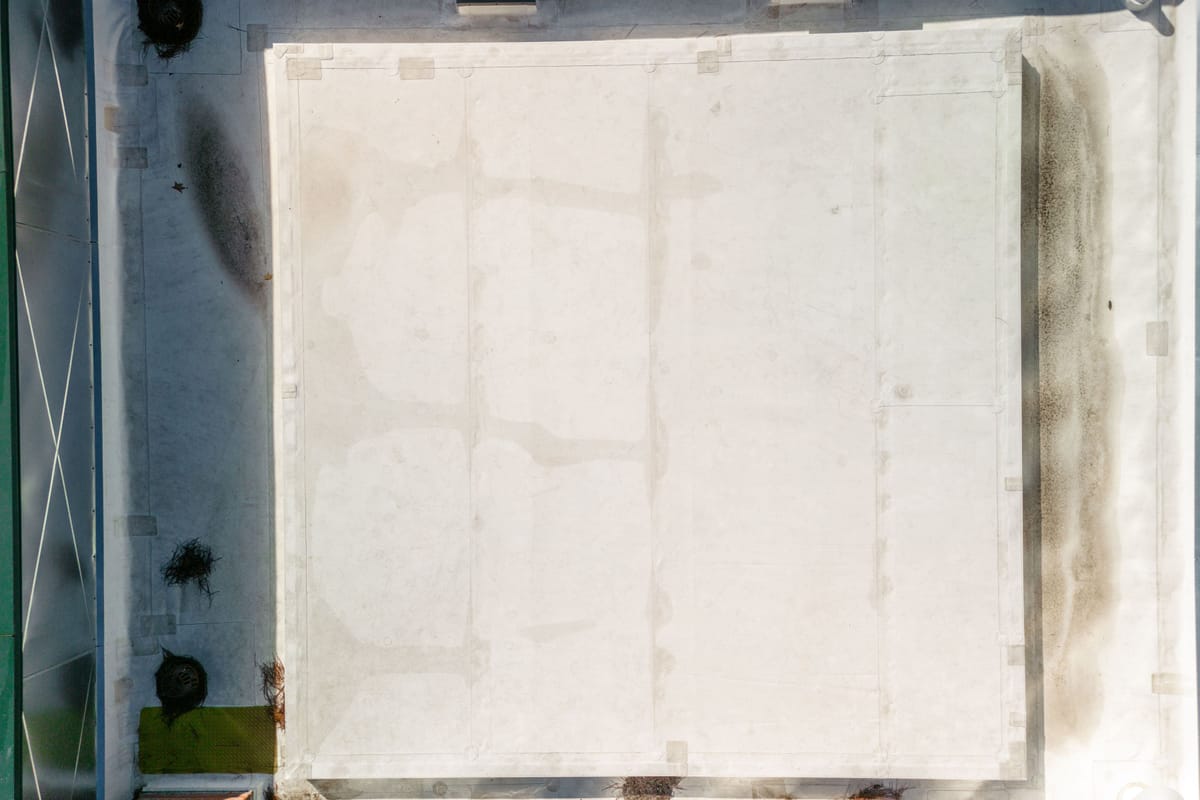
What Is an Overflow Scupper?
A roof scupper is a purposely created opening in a flat or low-slope commercial roof’s parapet wall or edge, designed to allow water to exit the roof surface. An overflow scupper sits higher than the main drainage outlet. It remains dry during normal rain but channels water out if the primary system is blocked or overwhelmed. The distinction between primary and overflow drainage is crucial: the former handles regular runoff, while the latter prevents emergency ponding and roof damage if something goes wrong.
How Overflow Scuppers Operate
- Rainwater flows downhill toward drains or scuppers on the roof.
- The primary drainage system (interior drains, gutters, primary scuppers) removes water during typical storms.
- If the primary system clogs, water rises to the overflow scupper’s elevation.
- The overflow scupper quickly channels water off the roof through the wall or edge, minimizing the risk of ponding or overload.
Overflow scuppers typically discharge water away from the building exterior or into a downspout or splash area. The most effective details size and locate the opening a few inches (often 2 inches) above the main drainage point—low enough to trigger during an emergency but high enough to avoid being used routinely.
Why Are Overflow Scuppers Essential for Commercial Roofs?
Flat and low-slope roofs on commercial properties in Longview, Tyler, Marshall, Kilgore, and the greater East Texas region face drainage challenges not present on steeper structures. Without proper backup drainage, ponding water can rapidly deteriorate TPO membranes, undermine seams, and contribute to leaks through parapet walls and roof penetrations.
Key reasons why overflow scuppers matter:
- Reduce ponding that strains roof structure and shortens membrane lifespan
- Mitigate leak risks at seams, walls, curbs, and mechanical penetrations
- Meet building codes for parapet roofs that require redundant drainage
- Protect against interior damage, disruption, and emergency repair costs
Many businesses discover after a heavy storm that scupper placement, size, or maintenance made the difference between routine water management and a significant roof failure.
Common Pitfalls in Overflow Scupper Design and Maintenance
- Incorrect height placement: Too high and water accumulates dangerously before relief, too low and scuppers operate during normal rain, causing staining or wall damage.
- Improper sizing: Undersized scuppers cannot discharge water quickly during heavy storms.
- Poor membrane integration: Gaps at the scupper or inadequate flashing can turn a backup drain into a leak pathway.
- Blocked discharge routes: Leaves, debris, or snow at the scupper outlet frustrate emergency drainage.
- Discharge onto vulnerable areas: Water ejected onto windows, walkways, or unprotected landscaping can lead to staining, erosion, or slip hazards.
At Roof Care, we routinely identify these issues during our commercial roof inspections and help clients resolve them before problems arise.
Overflow Scupper Integration with TPO Commercial Roofing
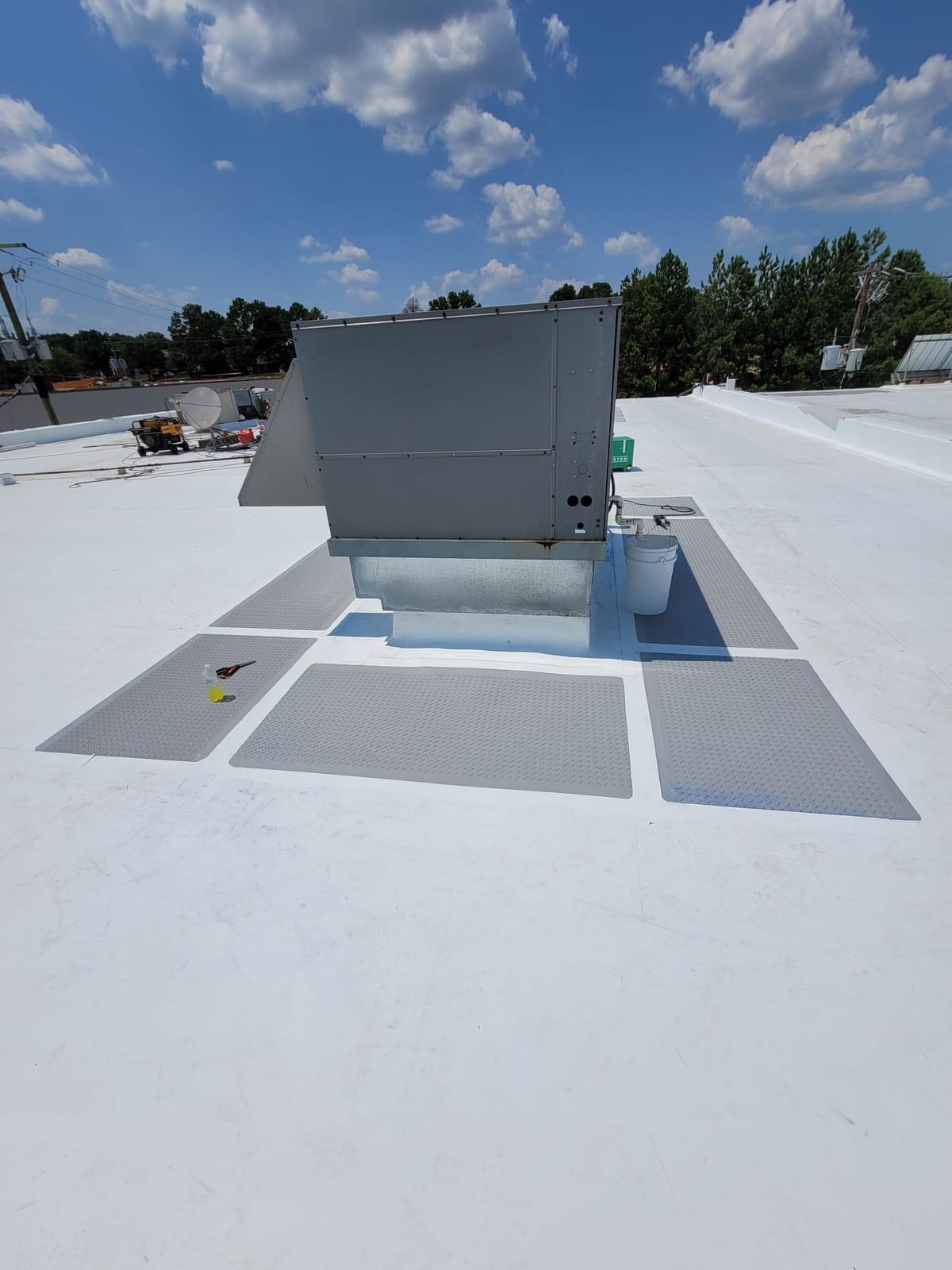
Properly integrating scuppers with TPO membranes requires expert installation to fully seal around each cut-out and upturn. Without precision, water can bypass the flashing and penetrate beneath the roof system. This is especially relevant during TPO overlays or replacements, as seen in our case study of a major Longview shopping center TPO project, where managing parapet penetrations—including scuppers—was a key focus to preserve the system’s long-term integrity and maintain manufacturer warranty.
For commercial property owners budgeting a roof replacement, Roof Care’s Instant Estimate Tool can help generate fast, accurate pricing for TPO overlays that include scupper upgrades as needed.
Signs Your Commercial Roof Drainage Needs Review
- Standing water persists over 48 hours after rainfall
- Rust, staining, or deterioration around scupper areas
- Water marks below or beside parapet walls, especially under scuppers
- Interior leaks near the roof edge or wall base
- Repeated overflow discharge (scuppers running during most storms)
- Visible debris accumulation in drain baskets or at scupper inlets/outlets
If you notice these indicators, Roof Care’s commercial team can investigate, clean, repair, and recommend necessary improvements to avoid future risk or code compliance issues.
Best Practices for Overflow Scupper Design and Maintenance
- Size overflow scuppers to match roof area and local rainfall patterns
- Place each scupper 2-4 inches above the primary drain or roof surface, consistent with drainage codes and roof geometry
- Use corrosion-resistant metals and high-quality TPO-compatible flashing for long-term performance
- Ensure discharge directs water safely away from building walls and pedestrian areas
- Schedule quarterly inspections to remove debris and check that all drains and scuppers are clear before rainy seasons
- Document any ponding or overflow events for future drainage improvement planning
Inspection & Maintenance Framework
- Inspect all drains and scuppers for blockages every 3 months or after major storms
- Check scupper metal and membrane seals for corrosion or separation
- Confirm overflow scuppers discharge to intended areas, without creating erosion hazards
- Record any signs of recurring ponding or overflow activity—persistent issues may indicate that the roof slope or drainage design needs changes
- If water marks or rust are present, consult with a professional roofing contractor for a detailed drainage assessment
You can read more inspection tips in our blog on internal drain and scupper inspections before a TPO replacement.
When to Involve a Roofing Expert
Overflow scupper activity should be rare. If your building experiences frequent water discharge from backup outlets, recurring ponding, or visible signs of drainage stress, contact a commercial roofing company like Roof Care for an expert evaluation. Our hands-on in-house crews are equipped to handle reviews, repairs, and retrofit upgrades for all types of commercial and industrial roof systems in East Texas. We are equipped to deliver end-to-end service, from diagnosis through full replacement, including custom metal scupper fabrication in our shop if needed.
For immediate planning or budgeting, our online Instant Estimate Tool is available for TPO replacements and can help you determine project scope before scheduling a formal inspection.
Overflow Scuppers in East Texas: Special Considerations
East Texas weather is unpredictable, and heavy rain events can test even the best roofing systems. On parapet roofs in this region, code-compliant overflow scuppers are not just a recommendation—they are a necessity for risk management. Building owners in Longview, Tyler, Marshall, or Kilgore should evaluate this detail on any flat roof or when considering a TPO replacement project. Our Roof Care team routinely helps clients confirm their drainage strategy meets both regulatory demands and real-world weather risks. For further reading, see our guide on commercial box gutters and overflow risks for property managers.
FAQ: Commercial Overflow Scuppers
What is the code requirement for overflow scuppers?
Building codes for commercial roofs typically require secondary (overflow) drainage when a parapet prevents water from exiting the roof through standard means. The overflow scupper must be above the primary drain but low enough to provide timely relief.
How often should commercial roof scuppers be cleaned?
Every 3 months as a minimum, and always after significant storms or heavy debris accumulation. Quarterly checks help prevent undetected blockages in East Texas’ variable climate.
Can overflow scuppers discharge directly onto the ground?
While some older systems do this, best practice is to discharge into a controlled splash area or downspout, away from pedestrian zones or areas vulnerable to water damage.
How do I know if my scuppers are doing too much work?
If overflow scuppers discharge during routine rainfall, the primary drainage may be underperforming, undersized, or clogged, and a professional review is recommended.
Should scuppers be integrated with TPO membrane systems?
Absolutely. Proper integration with TPO or other membrane types ensures a watertight seal and maintains long-term roof integrity. Poor integration is a common source of leaks.
Who should evaluate or upgrade overflow drainage?
Engage a licensed, experienced commercial roofer such as Roof Care who is familiar with East Texas codes, weather, and modern roofing materials. Our team regularly manages large-scale TPO, metal, and membrane roof replacements including upgraded scuppers and drainage systems.
Conclusion: Why This Detail Matters for Commercial Roofing
Overflow scuppers are a small but vital part of a commercial flat roof’s performance and code compliance. In East Texas, weather volatility means that one missed detail can create costly repairs and business interruption. That is why Roof Care encourages all property owners and managers to make overflow drainage a priority in every commercial roof inspection, repair plan, or replacement project. Use our Instant Estimate Tool when budgeting for TPO replacements or call us for a comprehensive drainage assessment—because on your commercial roof, it’s the small details like scuppers that protect the big investments.

