




-
 Residential Roofing
-
 0 Comments
Class 3 vs Class 4 Shingles: Understanding Impact Ratings Before You Buy
Class 3 and Class 4 asphalt shingles both carry impact-resistance ratings, but Class 4 is the higher rating under UL 2218. A Class 3 shingle passes testing with a 1.75-inch steel ball, while a Class 4 shingle passes testing with a 2-inch steel ball. For a homeowner comparing hail-resistant shingles, the distinction is straightforward: Class 4 demonstrates resistance to the more demanding test impact. Neither rating means a roof is hail-proof.
The better purchase depends on the specific product, the installed price, your exposure to hail, and the condition of the rest of your roofing system. Roof Care recommends comparing written proposals for complete roof assemblies, not choosing from a class number or a shingle sample alone. Decking, flashing, underlayment, ventilation, and installation details can all affect how a roof performs after a storm.
For homeowners in Longview, Tyler, Marshall, Kilgore, and nearby East Texas communities, the practical question is whether the additional protection demonstrated by a Class 4 product is worth its particular price difference. Get that price in writing, check the exact product rating, and ask your insurer about any applicable policy credit before deciding.
What does an asphalt shingle impact rating measure?
An impact rating describes how a roofing product performs in a controlled laboratory test. UL 2218 classifies roof coverings by their resistance to damage from impacts. In the steel-ball test used to explain asphalt shingle ratings, a ball is dropped onto the product and the tested assembly is examined for damage such as cracking or splitting. The classes run from 1 to 4, with Class 4 representing the highest rating on that scale.
The class is a test result for a specified product, not a forecast of how many years your roof will last. A storm can involve wind-driven hail, repeated strikes, changing impact angles, and roof components that were not represented by a simple rating comparison. Roof age and installation conditions also matter. A Class 4 shingle can still be damaged, and a Class 3 shingle can remain serviceable after a storm.
When we review impact-resistant shingles with a homeowner, we ask for the exact manufacturer and product line. Do not assume that every color, profile, or product sold under a familiar brand has the same classification. Have the contractor identify the proposed shingle in the estimate and provide documentation for its stated UL 2218 class.
Class 3 vs Class 4 shingles at a glance
| Buying question | Class 3 | Class 4 |
|---|---|---|
| UL 2218 test-ball diameter | 1.75 inches | 2 inches |
| Relative impact rating | Lower than Class 4, but still an impact-resistant classification | Highest classification on the UL 2218 scale |
| Hail-proof? | No | No |
| What to verify | Exact product rating, full installed scope, and insurer requirements | Exact product rating, upgrade cost, full installed scope, and insurer requirements |
| Potential fit | A homeowner who wants an impact-rated product while limiting the cost of the shingle upgrade | A homeowner who prioritizes the highest available UL 2218 classification and finds the installed price reasonable |
The larger test ball is the key distinction. It does not follow that a Class 4 roof will survive every hailstone of a particular diameter, or that a Class 3 roof will fail whenever hail reaches the test-ball size. Steel balls in a controlled test and hail in a moving storm are not interchangeable measures of guaranteed field performance.
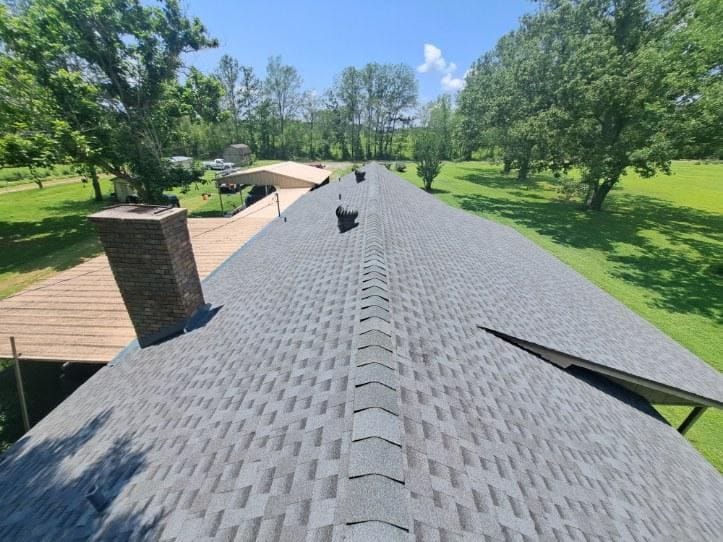
Why the higher class is not automatically the better purchase
A Class 4 rating answers one question: how that product performed under the applicable impact test. It does not, on its own, tell you whether the shingle is the best fit for your roof or budget. A roof also has to shed water at valleys, walls, vents, chimneys, and eaves. Its fasteners and seal strips have to perform in wind. Its substrate must be suitable for a new installation.
Impact resistance and wind resistance are different
A hail impact rating is not a wind rating. If your existing shingles have lifted, torn, or lost their seal in storms, ask about the proposed product’s wind-related installation requirements as well as its impact class. Starter courses, fastening, and ridge details need attention in a replacement proposal. A higher impact class does not correct a poorly secured roof edge or a deficient installation.
Appearance and watertightness are different questions
After hail, a shingle might show a mark without an obvious loss of water-shedding function. Conversely, damage that looks small from the ground may warrant closer inspection. Granule loss, exposed matting, splits, and damage at vulnerable details should be assessed in context. Do not treat every visible mark as proof that the roof must be replaced, and do not assume a highly rated roof needs no inspection after a significant storm.
A rating does not repair old decking or flashing
If the roof deck is soft or damaged, covering it with a premium shingle does not fix the substrate. Flashing at a chimney or wall can also leak independently of the shingles around it. When a leak is already present, first determine whether shingles, flashing, or decking are responsible. That diagnosis should shape the replacement scope and budget before you spend more on a particular impact class.
How to decide between Class 3 and Class 4
Roof Care uses a simple sequence for residential shingle decisions: inspect the existing roof, verify the candidate products, compare complete installed scopes, then check insurance and warranty terms. Following that order helps keep a compelling product label from obscuring more basic roofing work.
1. Start with the condition of the roof you have
Ask for an inspection of shingles, roof penetrations, valleys, edges, accessible decking conditions, and attic ventilation where appropriate. Note existing leaks and prior repairs. If damage is isolated, a targeted repair may be a reasonable question to discuss before committing to a full replacement. If shingles are widely deteriorated or the roof has recurring problems, compare replacement options with that condition in mind.
After a storm, document what you observed and avoid making a product decision from a ground-level glance. We can inspect for storm damage and help homeowners understand what should be documented for an insurance claim. An inspection identifies conditions on your particular roof; a product brochure cannot.
2. Request the exact Class 3 and Class 4 products
Ask each bidder to name the manufacturer, product line, and impact classification in the written proposal. If an estimate simply says premium or impact-resistant shingles, ask which product it means. You need that information to compare ratings, warranty documents, appearance, and any insurer eligibility requirements.
Two bids that both say Class 4 can still describe different roofing systems. They may differ in underlayment, flashing scope, decking allowances, ventilation work, or disposal. If you cannot tell what each contractor will install and replace, you cannot reliably compare the prices.
3. Separate the shingle upgrade from necessary roof work
Request a price for each option on a comparable scope. Have the contractor identify what changes between the Class 3 and Class 4 proposals and what stays the same. Decking repairs, replacement flashing, ventilation corrections, and other essential details deserve their own explanation; they should not disappear into a vague material-upgrade line.
For a preliminary budget, Roof Care’s Instant Estimate Tool provides roof replacement options using satellite measurements. It is a starting point, not a substitute for an inspection or a written comparison of two specific rated shingle products. Hidden decking damage, existing roof layers, slope, and other site conditions can affect the final scope and price.
4. Ask the insurer about the proposed product, not just the class
Some insurers may recognize qualifying impact-resistant roofing, but do not build an expected discount into your decision until your carrier confirms it. Provide the exact product information and ask what documentation the policy requires. Confirm whether the credit applies to that product, what part of the premium it affects, and whether a cosmetic-damage provision changes how a future hail claim would be handled.
An insurance credit, if available, is only one part of the comparison. Your deductible, coverage terms, and the cost of the installed roof also matter. If you are replacing a storm-damaged roof through a claim, review what changes when insurance pays versus when you pay out of pocket before assuming an upgrade is included in the approved scope.
5. Read the warranty documents before choosing
A manufacturer’s warranty and a contractor’s workmanship warranty address different obligations. Ask what the specific shingle warranty covers, what it excludes, and whether registration or installation requirements apply. In particular, do not interpret impact-resistant to mean the manufacturer will pay for every instance of hail damage or appearance change.
Roof Care offers a 7-year workmanship warranty on new residential installations. Discuss the warranty that applies to your proposed system and get the relevant terms in writing. Our guide to roofing warranties can help you frame the questions before reviewing a proposal.
Which homeowner might choose each rating?
When Class 3 can be a sensible choice
Class 3 may be a good fit when you want a documented impact-resistant shingle but the Class 4 upgrade takes money away from work your roof needs more urgently. For example, an estimate may identify deteriorated flashing or ventilation concerns alongside the shingle replacement. Addressing those conditions can be more important to the overall result than buying a higher-rated shingle while leaving essential details unresolved.
It can also be reasonable to choose Class 3 when the exact installed price difference is substantial for your budget and your insurer offers no meaningful advantage for the Class 4 product. The decision should be based on actual written proposals and policy information, not an assumption that one class is always the best value.
When Class 4 deserves a closer look
Class 4 is worth serious consideration if your priority is the highest UL 2218 impact classification available for asphalt shingles. If your property has had hail-related roof issues, compare the proposed Class 4 product closely with the Class 3 alternative. Look at the full roof price, your expected ownership plans, warranty language, and any insurer response before deciding whether the upgrade fits.
The phrase highest impact rating is accurate within the UL 2218 scale. The phrase storm-proof roof is not. Even with Class 4 shingles, you still need sound decking, properly executed details, and follow-up inspection when a storm may have damaged the roof.
Best practices for buying impact-resistant shingles
- Compare identical scopes. Keep the proposed tear-off, flashing, underlayment, ventilation, and cleanup consistent when asking for a Class 3 versus Class 4 price.
- Get the rating in writing. Request the exact product and its impact-class documentation rather than relying on a verbal description.
- Ask about damaged materials below the shingles. Find out how the contractor will identify and price decking that needs replacement once the existing roof is removed.
- Check the whole roof design. Give valleys, wall intersections, penetrations, roof edges, and drainage the same attention you give the shingle label.
- Confirm insurance terms directly. Your agent or carrier should explain eligibility and claim provisions for your policy and the product under consideration.
- Keep installation records. Retain the proposal, product information, warranty documents, and final invoice for future maintenance or insurance questions.
- Inspect after suspected storm damage. Do not climb onto a steep or damaged roof to investigate. Arrange a professional inspection if hail or wind may have affected it.
Homeowners looking for a roofing contractor in Longview TX should expect a clear explanation of both product differences and repair priorities. The same approach applies if you need roof repair in Tyler TX before deciding whether replacement is warranted. Choosing an East Texas roofing company should involve evaluating its inspection and written scope, not just asking which impact class it recommends.
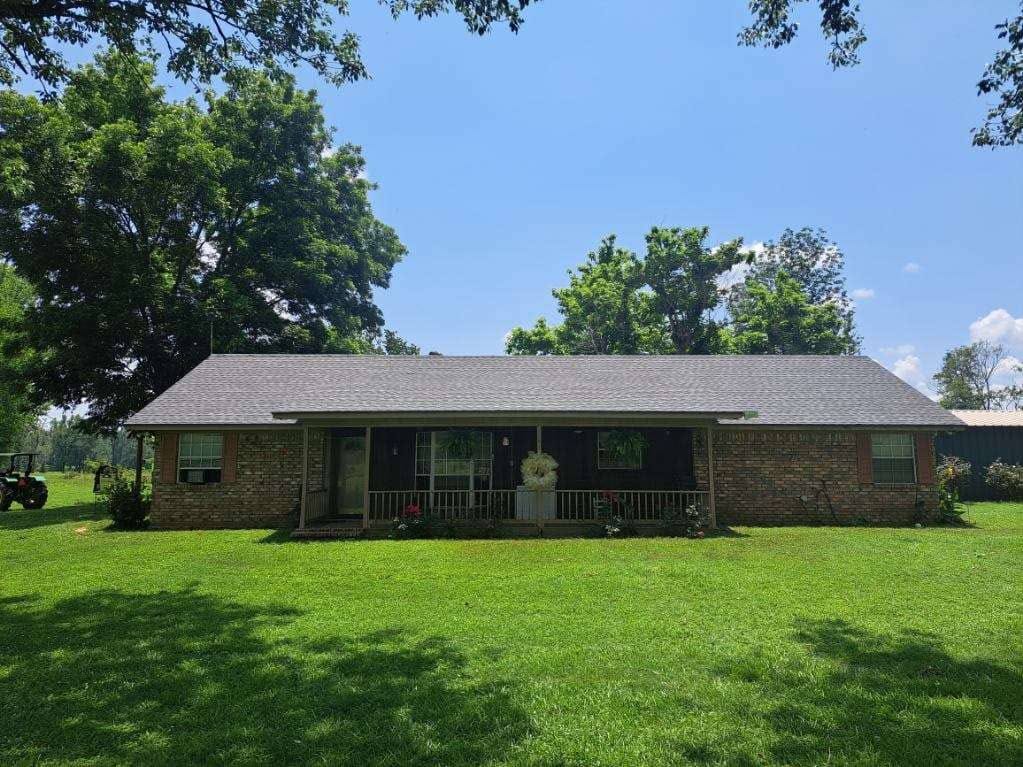
A boundary worth noting for commercial properties
This Class 3 versus Class 4 discussion concerns asphalt shingles, typically on a sloped roof. A commercial building with a flat or low-slope roof needs a different system evaluation. Do not select a shingle based on its UL 2218 class for a roof where a low-slope membrane assembly is the appropriate subject of the estimate.
For building owners and property managers considering a commercial flat roof replacement, Roof Care also evaluates TPO membrane roofing. Commercial hail requirements involve the proposed assembly and project specifications, not a residential shingle’s Class 3 or Class 4 label. Our Instant Estimate Tool dynamically calculates pricing for TPO roofing systems alongside residential products, which can help with an initial budget before a site review. This is a separate decision from choosing shingles for a home.
Frequently asked questions
Are Class 4 shingles better than Class 3 shingles?
For the impact test represented by UL 2218, Class 4 is the higher rating. Whether it is the better purchase for your home depends on the exact installed price, the condition of the roof system, your priorities, and insurance terms.
Do Class 3 shingles qualify as impact-resistant?
Yes. Class 3 is an impact-resistance classification. It is lower than Class 4 on the UL 2218 scale, but it should not be confused with a shingle that has no documented Class 3 rating.
Can Class 4 shingles still be damaged by hail?
Yes. Class 4 identifies performance in a controlled impact test, not immunity from hail. Repeated strikes, wind-driven impacts, aging, and the condition of the installed roof can affect the outcome of a real storm.
Will a Class 4 roof reduce my insurance premium?
It might, but no discount is automatic. Ask your insurer whether the exact proposed product qualifies under your policy, what proof is required, and whether any cosmetic-damage provision applies. Get the answer before including a potential credit in your budget.
Does a higher impact class mean a longer shingle life?
Not by itself. An impact class is a test classification, not a service-life guarantee. Product selection, installation, ventilation, roof design, and exposure all matter. Read the warranty for the specific product rather than inferring its lifespan from the class number.
Should I replace my roof after hail if I have Class 4 shingles?
Not automatically. Have the roof inspected if the storm may have caused damage. The appropriate next step depends on what is found, including the condition of shingles, flashing, and other roof components, as well as your policy terms.
Can I upgrade to Class 4 shingles during an insurance replacement?
You can ask your contractor to price an upgrade, but do not assume it is part of the insurer’s approved work. Review the claim scope, discuss any added cost, and confirm the proposed product and installation requirements before proceeding.
Do Class 3 or Class 4 shingle ratings apply to TPO roofs?
These comparisons are for impact-rated shingles. A TPO roof is a different kind of roofing system and should be evaluated against its applicable assembly requirements and the building’s needs, rather than a residential shingle classification.
Make the decision from the roof outward
Choose Class 3 if its verified impact rating and complete installed price meet your needs. Consider Class 4 when the higher test classification is a priority and its specific upgrade cost makes sense for your property. In either case, make the decision after reviewing the roof condition, proposed materials, insurance terms, and installation scope.
If you would like help comparing the options for an East Texas home, Roof Care can inspect the roof and prepare a residential roofing estimate. Call (903) 399-5403 or email contact@roof.care to discuss your roof in Longview or a nearby community.

