




-
 Residential Roofing
-
 0 Comments
TPO vs. Modified Bitumen: Which Flat Roof System is Best for East Texas Businesses?
When East Texas business owners and facilities managers are weighing flat roof systems, the longtime assumption has been that TPO (Thermoplastic Polyolefin) is the premium-priced option compared to modified bitumen. The reality on the ground in Longview, Tyler, Marshall, Kilgore, and across our region is different: TPO is usually the lower-cost solution—both at installation and over the life of the roof. This is a critical decision factor, especially in a market where every savings counts, and it’s a conversation we have every week at Roof Care while helping local businesses maximize their budget and roof performance.
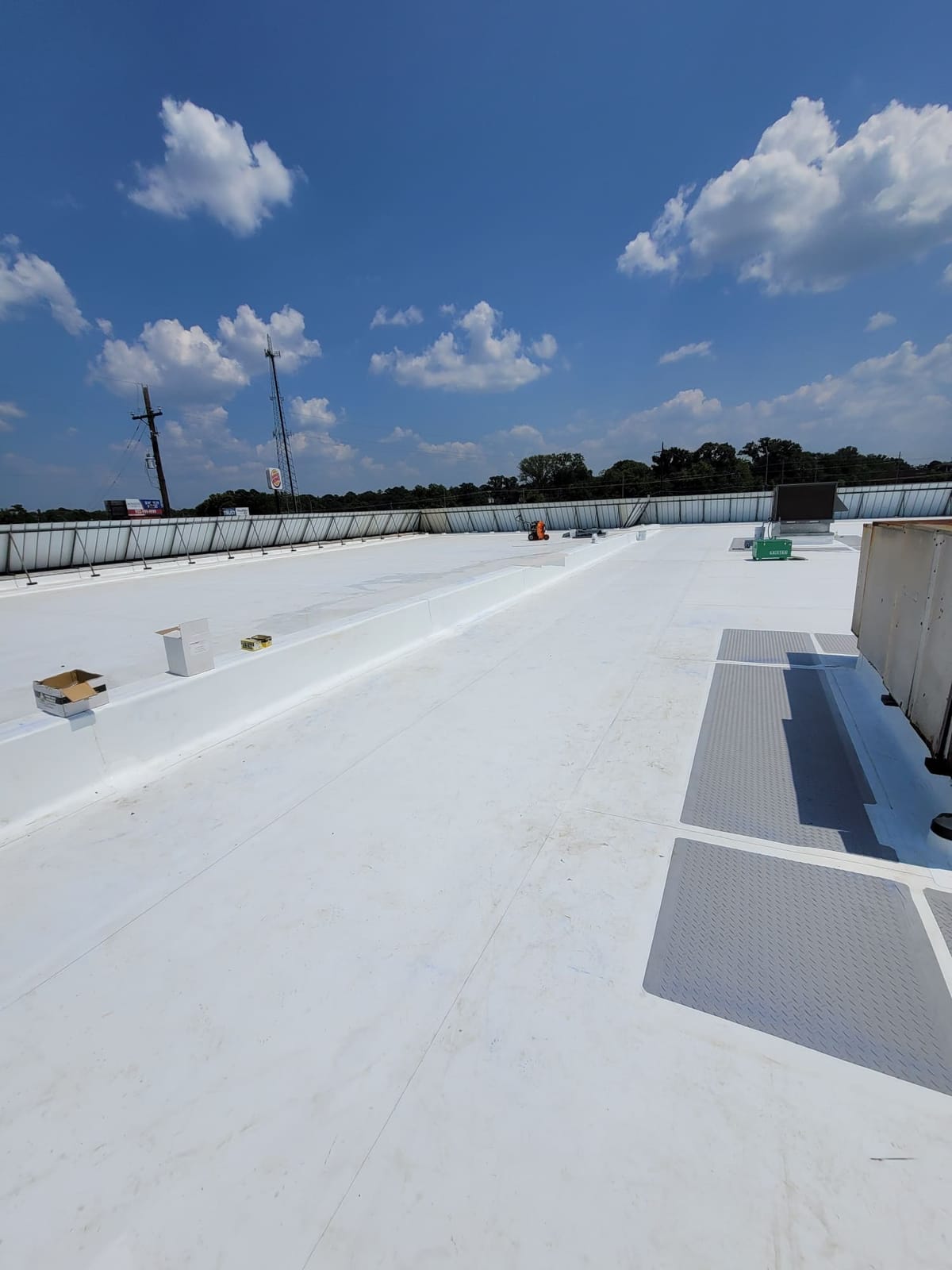
Understanding TPO and Modified Bitumen Roofing
TPO Roofing
- Material: A single-ply, heat-welded membrane made from a blend of polypropylene and ethylene propylene, reinforced for long life and high reflectivity.
- Seams: Hot-air-welded seams form a highly watertight monolithic surface, reducing leak potential.
- Main uses: Ideal for large commercial roofs and facilities where energy savings and efficiency matter.
Modified Bitumen Roofing
- Material: Multi-layer system of asphalt infused with rubber polymers (SBS or APP) and reinforced with fiberglass or polyester mats.
- Surface: Often dark or mineral-coated; may need a separate reflective coating for energy performance, which increases maintenance costs.
- Main uses: Suited for sections with repeated foot traffic or for matching legacy systems.
Cost Comparison: Why TPO is Cheaper Than Modified Bitumen
- TPO typically offers a lower installed price per square foot than modified bitumen when comparing equivalent warranty periods, insulation assemblies, and installation scope, especially for roofs over 5,000 sq ft.
- Our Instant Estimate Tool consistently calculates TPO systems as the lower-cost option for commercial scale projects.
- Lower labor hours: TPO roles out quickly with fewer seams to seal and has less labor-intensive installation methods compared to torch-down or multi-layer bitumen.
- Material efficiency: As a single-ply roof, TPO systems require less overall material than built-up, multi-ply modified solutions.
- Modified Bitumen has a higher baseline cost in most modern installations, due to labor intensity, additional layers, flashing requirements, and regular need for surface coatings. It’s also more expensive to demo and haul away if full tear-off is needed.
It surprises many of our clients, but value engineering and economies of scale make TPO both cheaper up front and more cost-effective to maintain over two or three decades of service life, even before considering energy savings and reduced heat load for East Texas businesses.
Comparative Analysis: Longevity, Efficiency, and Suitability
Service Life Expectancy
- TPO: 20 to 30 years is common with regular maintenance. Manufacturer NDL warranties up to 25 years are available and frequently utilized by our Texas clients.
- Modified Bitumen: 15 to 20 years, but only reaches 25–30 years with intensive maintenance, strategic re-coating, and diligent surface inspections.
Energy Efficiency and Cooling Costs
- TPO: Reflective white membrane reduces cooling load by up to 25–35%, offering substantial long-term operational savings in hot, sunny climates such as East Texas.
- Modified Bitumen: Typically absorbs heat unless regularly re-coated, which means higher AC bills and long-term inefficiency unless you pay for frequent upkeep.
Durability, Traffic, and Storm Resistance
- TPO: Resilient against standing water, UV rays, and chemicals. Higher-mil TPO resists most punctures well, but very high-traffic zones may require extra reinforcement.
- Modified Bitumen: Excels in high-puncture, heavy-traffic areas or where legacy bitumen systems already exist. The most impact-resistant option if rooftop abuse is routine.
Installation Factors and Facility Disruption
- TPO: Fast to install, low odor, and does not require use of open flames or toxic adhesive, making it the best choice for hospitals, schools, and occupied commercial spaces.
- Modified Bitumen: Can present odor and logistical challenges from torch-down methods, and often slower for large-scale projects. Additional labor drives up total project cost.
Maintenance and Repairs
- TPO: Inspections and quick repairs keep long-term investment low. Seam repairs require hot-air welders.
- Modified Bitumen: Patches are straightforward, but resealing and coating add recurring costs to keep reflectivity and water resistance high.
When to Choose TPO vs. Modified Bitumen in East Texas
Best Applications for TPO
- Commercial or industrial roofs over 5,000 sq ft where cost, roof longevity, and thermal performance are top priorities
- Retail plazas, warehouses, educational institutions, large-volume storage
- Facilities aiming for fast installation, lower facility disruption, and seamless energy savings
- Projects where the budget must stretch furthest per square foot—now proven to be TPO by our project results
Best Applications for Modified Bitumen
- Concentrated, high-abuse areas—mechanical rooms, rooftop work decks, or where legacy multi-ply compatibility is a must
- Facilities where tenants access the roof regularly with heavy equipment
- Partial repairs to preserve system continuity on existing bitumen assemblies
Hybrid and Custom Approaches
Many of our best-performing projects use a hybrid: TPO for broad coverage and modified bitumen in traffic paths or sensitive mechanical areas. This approach leverages the cost advantages of TPO with the tactical strength of bitumen exactly where it’s needed, and is a hallmark of Roof Care’s tailored consulting.
How to Select the Best Flat Roof System for Your Building
- Define Traffic Demands
Map where ongoing rooftop access is necessary. Only reinforce these areas—avoid overspending on entire-system bitumen unless it is truly needed. - Determine Energy Requirements
Analyze cooling costs; TPO’s reflectivity is a significant value as energy prices continue upward in Texas. - Review Local Codes and Insurance
New performance standards, insurance discounts, and municipal codes often favor cool roofs such as TPO in our region. - Model Both Initial and Lifecycle Costs
Request a detailed breakdown; TPO is consistently the lowest total cost for large and medium facilities, based on both install and 10+ year maintenance outlook. - Consult a Roofing Expert for Inspection and Bid
Only a hands-on local expert can assess substrate, ponding, and system tie-ins. Roof Care’s project managers create line-item comparisons so you can prioritize your spend with clear rationale.
Use Our Instant Estimate Tool for Accurate, Transparent Quotes
- Enter your property address and outline, and the tool immediately gives pricing options for both TPO and other commercial/flat roof systems.
- Get side-by-side costs based on your real building dimensions—no hidden fees or wait times.
- Use this data as a defensible budget for internal approval or insurance claims, risk-free and no contract required.
Try the Instant Estimate Tool now—our technology brings commercial roof budgeting into the 21st century for East Texas businesses.
Best Practices for Flat Roof Installation and Maintenance in East Texas
- Choose certified, insured professionals (Roof Care is GAF Master Certified, licensed, and insured for all flat roof types)
- Commit to annual inspections and proactive cleaning to maintain warranty eligibility and maximize service life
- Add reinforced walkways on any high-traffic zone, regardless of system type
- Maintain a written log of all maintenance and upgrades, supporting future warranty and insurance claims
- Schedule major replacements around least-busy seasons to minimize impact on tenants and customers
You’ll find more guidance on roof resilience and severe weather preparation in our post: Preparing Your Commercial Roof for Severe Weather: Strategies for East Texas Business Owners.
Frequently Asked Questions
Is TPO really cheaper than modified bitumen for commercial roofs in East Texas?
Yes, in most standard commercial installations, TPO will cost less both to install and to maintain, primarily due to reduced labor, easier application, and lower material usage. Labor savings on large or unobstructed roofs often tip the balance decisively in TPO’s favor.
Why does modified bitumen cost more, and is it ever worth it?
Bitumen is labor-intensive, requires more layers, and usually additional coatings for energy reflectivity. Choose it for heavy-abuse zones or where you must match an existing legacy system—otherwise, TPO’s lower cost and higher efficiency win out.
Does Roof Care install both TPO and modified bitumen?
Absolutely. We install both systems and custom design hybrid systems as appropriate for the application, so your building gets the best of both cost and performance attributes.
What about repairs and upgrades?
TPO is quick to repair by qualified crews. Modified bitumen is relatively simple to patch but can become costlier with required recoating. We offer maintenance contracts for all systems to extend roof life.
How can I get a quick price for budgeting?
Use our Instant Estimate Tool for real-time, data-driven cost comparisons. For complex facilities, request an on-site expert evaluation to refine your project scope and cost.
Conclusion: TPO Delivers More—For Less—in East Texas
If you are managing a commercial building, shopping center, warehouse, or institutional facility in East Texas, don’t let old assumptions about cost steer you away from TPO. The numbers are clear: TPO is not just energy efficient and reliable—it is also the most affordable flat roof system per square foot, from installation through long-term ownership, in our region. For tailored advice and transparent cost modeling by local experts, reach out to Roof Care or try our Instant Estimate Tool to see your real TPO savings today.
